
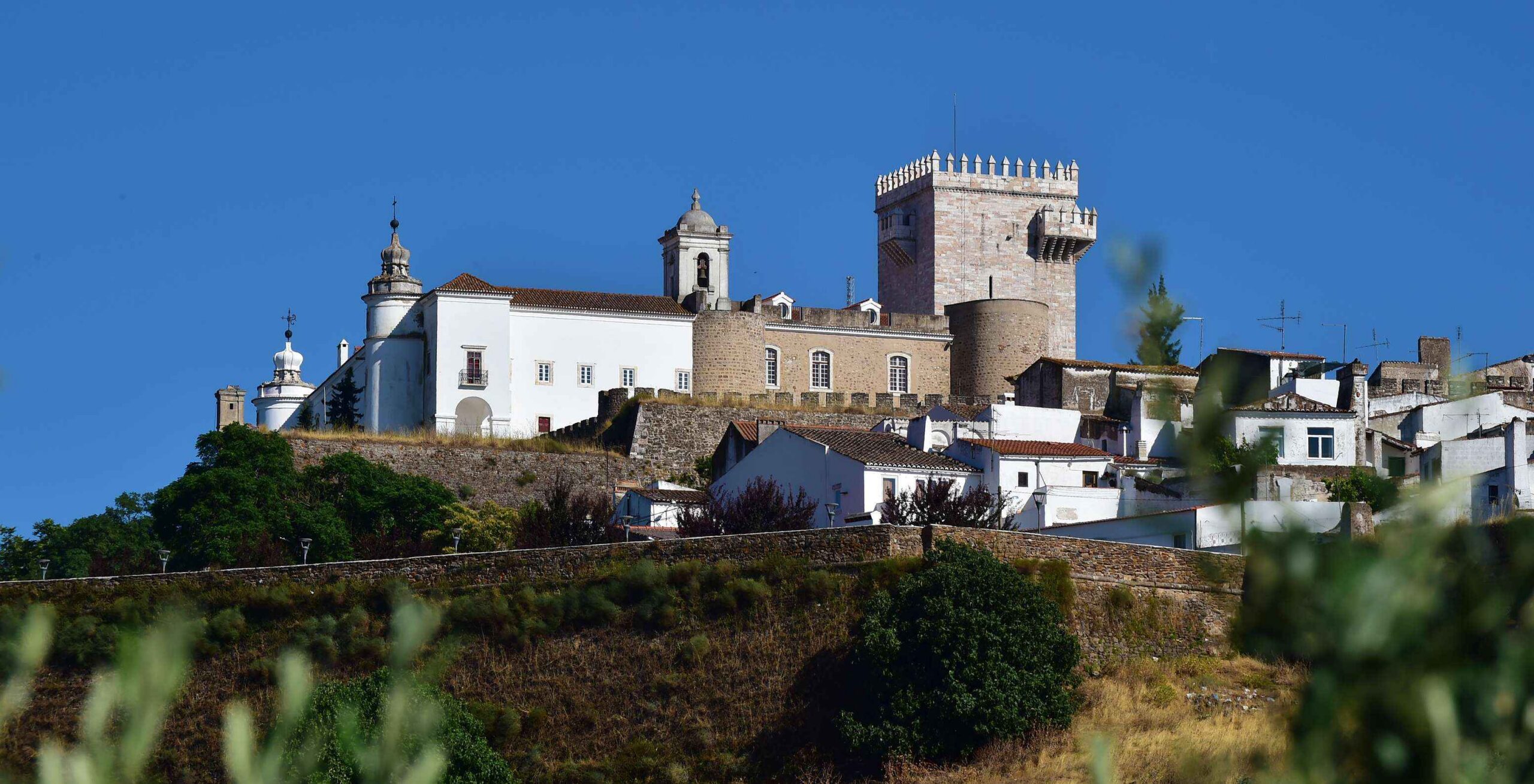
Estremoz Castle crowns the hill at the heart of the town's old quarter, a medieval fortress that is both the historic and the literal high point of Estremoz.
The castle was begun in the thirteenth century, between the reigns of Afonso III and Dinis. Within its walls, King Dinis built a royal palace for his wife, Queen Isabel — the future Queen Saint Isabel, who lived and died here in 1336. In later centuries the palace served other roles, and was adapted as a war store under King João V in the eighteenth century, in the Joanine Baroque style.
From the late 1960s the former Royal Palace was carefully restored and converted into a pousada — a historic state hotel. Today the castle hill brings together this pousada, the marble keep, the Queen Saint Isabel Chapel and cultural spaces, with sweeping views over the town and the Alentejo plain.
Destacados
- Hilltop medieval castle, the high point of Estremoz
- Royal palace built by King Dinis for Queen Isabel
- Where Queen Saint Isabel lived and died, in 1336
- Former palace now a historic pousada
- Sweeping views over the town and the Alentejo plain
History & context
Estremoz Castle was begun in the thirteenth century, between the reigns of Afonso III and Dinis. King Dinis built a royal palace within the walls for Queen Isabel, who died there in 1336. The castle served in the defence of the Portuguese frontier and, by tradition, as a base for Nuno Álvares Pereira before the Battle of Atoleiros in 1384. Under King João V, in the eighteenth century, the former Royal Palace was adapted as a war store in the Joanine Baroque style. Between the late 1960s and the 1980s it was restored and converted into a pousada.
🗓️ Mejor época para visitar
Spring and autumn for mild weather; late afternoon for the light over the town and the plain.
⏱️ Duración
1–1.5 hours
♿ Accesibilidad
Limited. The castle sits at the top of the old town, reached by steep, cobbled streets and historic surfaces.
Preguntas frecuentes
Can you visit Estremoz Castle?
Yes. The castle hill brings together a pousada, the marble keep, the Queen Saint Isabel Chapel and cultural spaces, with wide views.
Is the castle a hotel?
The former Royal Palace within the castle was restored and converted into a pousada, a historic state hotel.
Who built the royal palace?
King Dinis built the royal palace within the castle walls in the thirteenth century, for his wife Queen Isabel.