
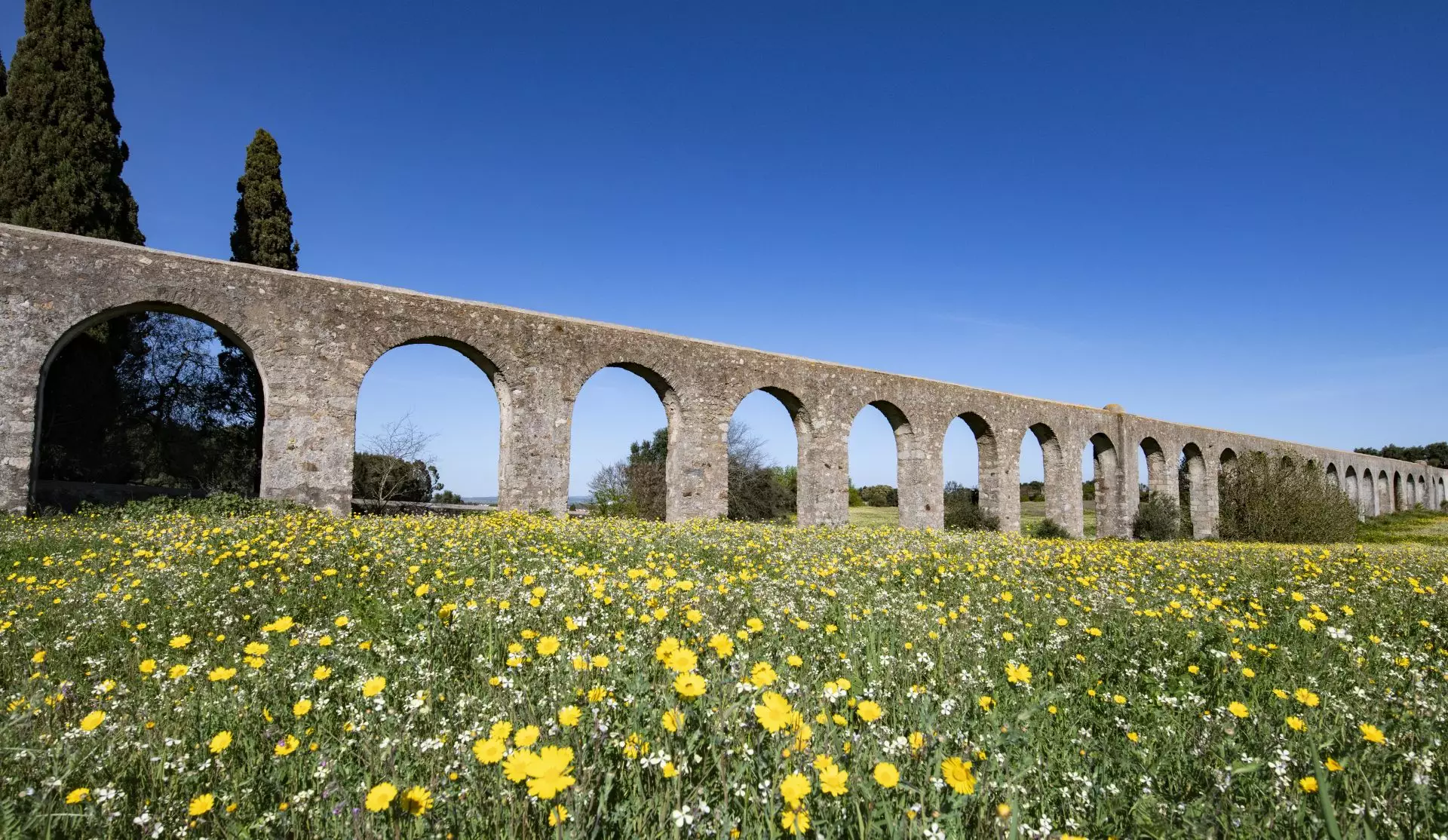
The Aqueduto da Água de Prata — the Aqueduct of Silver Water — was built in the 1530s under King João III to bring spring water nine kilometres into Évora, to a design attributed to Francisco de Arruda, architect of Lisbon's Belém Tower.
Its most charming stretch is the last: entering the city at Rua do Cano, the arches march straight through the neighbourhood, and over the centuries houses, shops and workshops have been built snugly into the arcade itself — a row of doorways and windows framed by Renaissance stone. Outside the walls, the full-height arches stride across the fields and a walking trail follows the channel towards the source.
It is free, always open, and best explored on foot from the city wall outwards, camera in hand.
Destacados
- Renaissance aqueduct of the 1530s under João III
- Attributed to Francisco de Arruda of Belém Tower fame
- Houses and shops built into the city arches
- Nine kilometres of channel, with a walking trail
- Free and always open
History & context
Completed in the 1530s to end the city's chronic water shortage, the aqueduct reused the path of a possible Roman predecessor; its name comes from the prized clarity of the spring water it carried.
🗓️ Mejor época para visitar
Late afternoon light on the stone; mornings for the Rua do Cano without parked cars.
⏱️ Duración
45 minutes – 2 hours with the trail
♿ Accesibilidad
Street-level viewing; the trail is flat unpaved track.
Preguntas frecuentes
Where is the best place to see it?
Rua do Cano, inside the walls, where houses are built into the arches; the full-height arcade outside the walls is a short walk further.
Can you walk along it?
A marked trail follows the aqueduct out of the city towards its springs — a pleasant flat walk of up to two hours each way.