
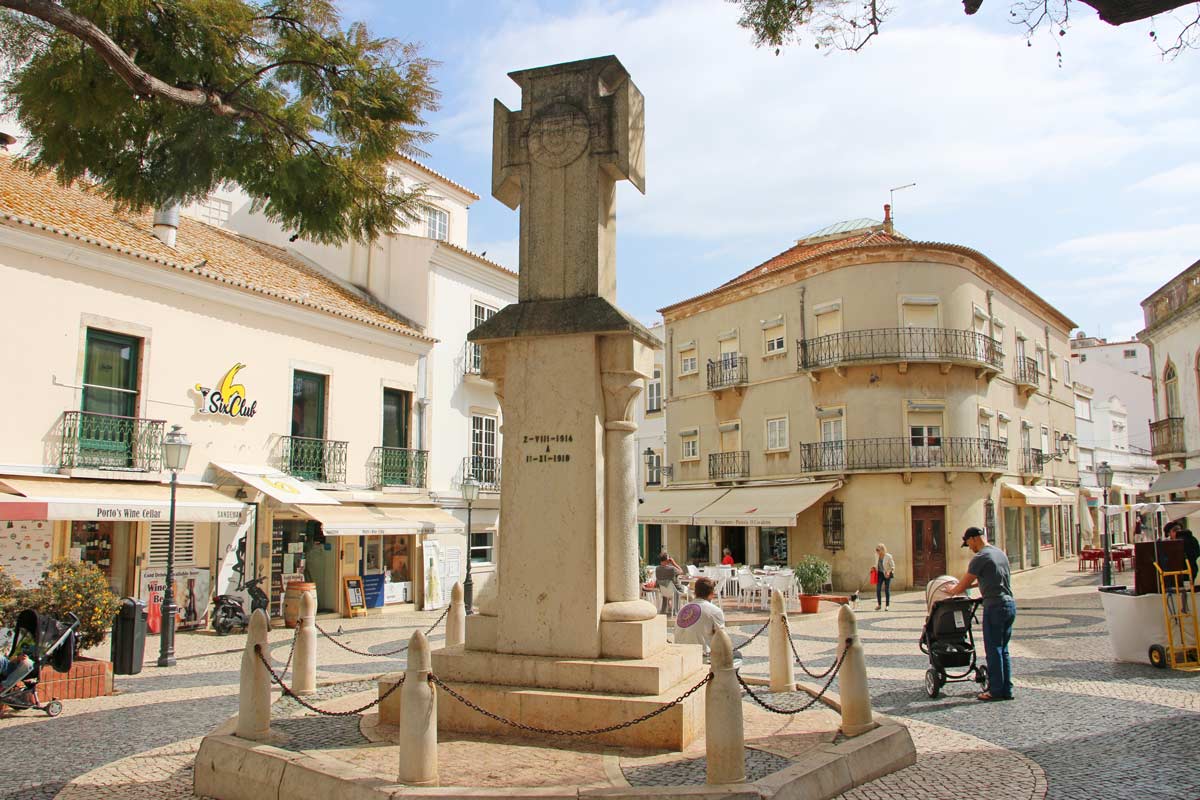
Lagos wears more history than any other Algarve resort: from this bay Henry the Navigator despatched the caravels that opened the African coast in the 1400s, and the old town inside the 16th-century walls keeps the memory in its squares and stones.
Praça Infante D. Henrique holds the navigator's statue, the Manueline window of the old governors' castle and the arcaded Mercado de Escravos; behind it, cobbled lanes thread to the church of Santo António — its interior a cave of gilded baroque carving, among Portugal's finest — and the adjoining Lagos Museum. Praça Luís de Camões and Rua 25 de Abril carry the cafés, galleries and evening crowd, and stretches of the city wall still frame the whole.
It is compact, flat and walkable in an unhurried half-day — best begun early, before the day-trip tide.
Destacados
- Departure bay of Henry the Navigator's caravels
- Gilded baroque interior of Santo António
- 16th-century walls framing cobbled lanes
- Praça Infante D. Henrique and its arcades
- Compact, flat and café-rich
History & context
Roman Lacobriga and a Moorish port before 1249, Lagos became the Algarve's capital (1577–1756) and the harbour of the Discoveries; the 1755 earthquake and tsunami levelled much, but walls, churches and street plan survived.
🗓️ Mejor época para visitar
Early morning for quiet lanes; evenings for the squares alive.
⏱️ Duración
Half a day
♿ Accesibilidad
Flat and largely pedestrian; smooth cobbles throughout.
Preguntas frecuentes
What is unmissable?
The church of Santo António — a small, astonishing cave of gilded carving — and the Infante's square with the old slave market.
How long does it need?
A relaxed half-day covers squares, church, museum and walls, with coffee stops where they belong.