
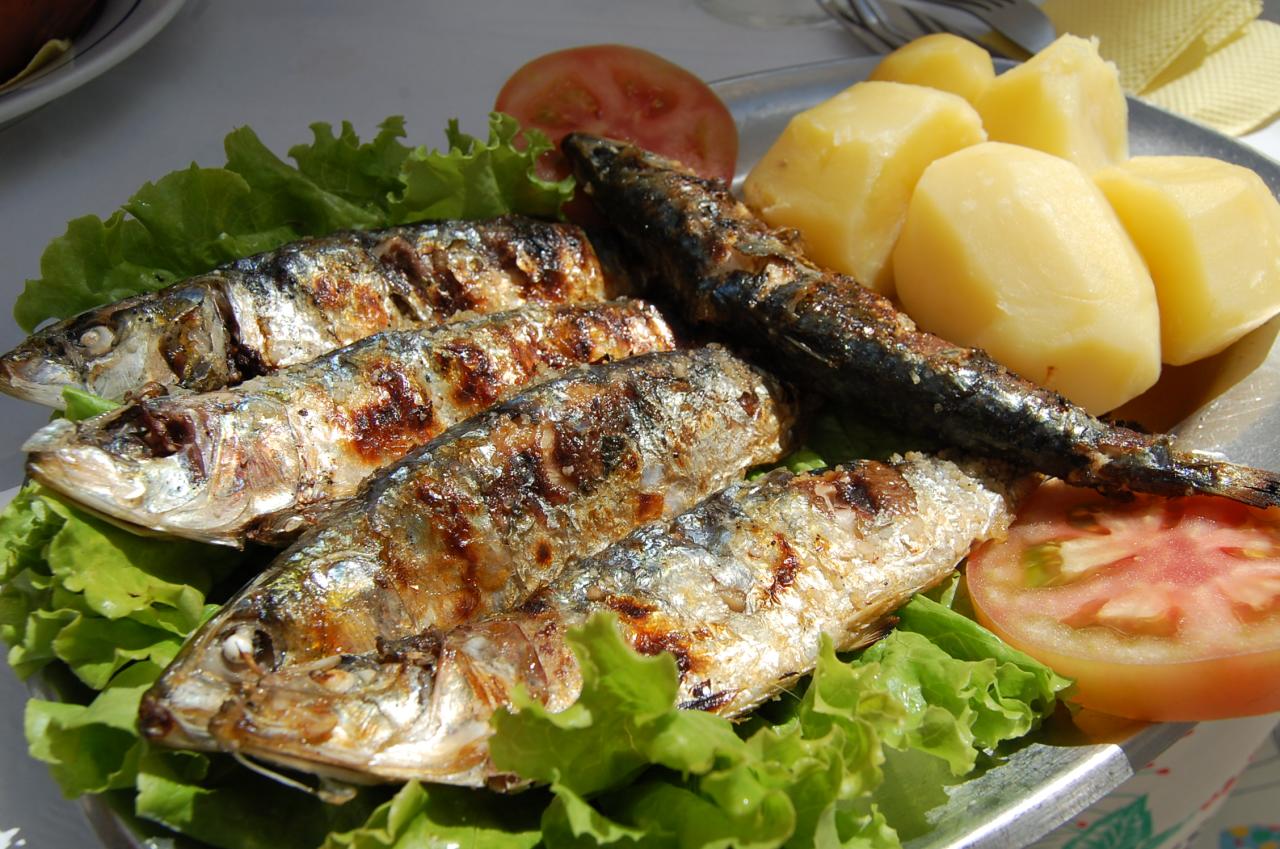
Sardinhas assadas are Portugal's most iconic summer dish — and an essential taste of Lisbon. From late May through October, when sardines are at their peak fattiness, you'll smell the smoke of charcoal grills drifting through the narrow streets of Alfama, Mouraria, and Bairro Alto.
The preparation is deceptively simple: whole, ungutted sardines are heavily salted, then grilled directly over hot coals until the skin crisps and chars. No butter, no marinade, no sauce — just salt, fish, and fire. The cooking releases a smoky, savoury oil that drips onto the grill below, perfuming the air.
Traditionally served on a thick slice of country bread (the bread acts as both a plate and a sponge for the fish's juices), or with boiled potatoes, roasted red peppers, and a simple tomato-and-onion salad. A glass of cold vinho verde is the classic pairing.
The peak moment is June, when Lisbon celebrates Santo António (13 June) and the Festas de Lisboa. Entire neighbourhoods set up communal grills, streets fill with smoke and music, and locals queue at every corner. For the rest of the season, family-run tascas, beach restaurants in Cascais and along the Setúbal coast, and rustic cervejarias all serve them.
A typical portion is six sardines (around 600g), priced between €10 and €15. Look for places where the sardines are visibly fat and silver — that's the sign of a good catch.
⭐ Imprescindible:
Sardinha no pão — a single sardine served on a thick slice of country bread soaked in the smoky oils
Platos típicos
- Sardinha no pão (sardine on country bread)
- Sardinhas assadas com pimentos (with roasted red peppers)
- Sardinhas com batata cozida (with boiled potatoes)
- Sardinhas e salada de tomate (with simple tomato salad)
- Petisco de sardinha em conserva (preserved sardines as appetizer)
Destacados
- Charcoal-grilled whole, never filleted
- Best from late May to October (peak: June)
- Served on country bread that soaks up the smoky juices
- Pairs perfectly with chilled vinho verde
- Centerpiece of Lisbon's Santo António festival (13 June)
- Look for fat, silver sardines — sign of peak season
- Typical portion: 6 sardines, around €10–15
- Classic sides: boiled potatoes, roasted peppers, tomato salad
Opciones dietéticas
✓ Gluten-free (without bread)
✓ Dairy-free
✓ Pescatarian
✓ Naturally low-carb (without bread or potato sides)
✓ High in omega-3 fatty acids
✓ High protein
Preguntas frecuentes
When is the best time to eat sardinhas assadas in Portugal?
Peak season is June through August, when sardines reach their highest fat content. They're at their absolute best around Santo António in mid-June, when Lisbon hosts massive street festivals dedicated to grilling them. From November to April fishing is closed for conservation — wait for May for fresh ones.
How are sardinhas assadas traditionally eaten?
With your hands, on a slice of bread. The bread soaks up the smoky oil and juices that drip from the fish, becoming the best part of the dish. Locals pinch off pieces of the sardine, eat the flesh, and discard the head, spine, and tail. Pair with vinho verde or a cold lager.
Are Portuguese sardines sustainable?
Yes. Portuguese sardine fishing is tightly regulated, with a closed season from November to April, daily quotas during the open season, and minimum size requirements. EU and Portuguese fisheries management monitor stocks carefully — sardines are one of the more sustainable seafood choices.
Can I find good sardinhas assadas outside the festival season?
Yes — family-run tascas in Alfama, Bairro Alto, and Mouraria serve them all summer. Beach restaurants in Cascais, Sesimbra, and the Algarve grill sardines through October. Outside May–October, look for other small grilled fish like carapau or biqueirão instead.
What's the difference between sardinha and anchova?
Sardines (sardinhas) are larger — typically 15–20cm — with silver skin and a strong, oily flesh, grilled whole. Anchovies (anchovas/biqueirão) are smaller, around 10cm, and usually salt-cured or marinated rather than grilled. Both are bluefish from the same family but prepared completely differently.