
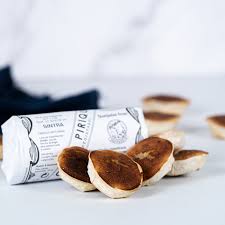
The queijada de Sintra is one of the oldest pastries in continental Europe still made commercially — its production in the Sintra region is documented as early as the 13th century, when it appears in records as a form of medieval tax paid in food by local farmers. Small (about 5 cm in diameter), round, and crusty, it consists of a thin pastry shell filled with fresh sheep's-milk cheese (queijo or requeijão), egg yolks, sugar, flour and cinnamon. The cinnamon is what makes it distinctively Sintra — a warm, fragrant spice that fills the air of the historic bakeries.
Queijadas were originally made by farming families in the Sintra hills as a way to use surplus fresh cheese; the recipes were standardised and refined over centuries by local monasteries, especially during the conventual-sweet tradition of the 17th and 18th centuries (when convents across Portugal developed elaborate egg-yolk pastries using yolks left over from clarifying wine with egg whites). By the early 18th century the queijada had moved from monasteries to commercial bakeries.
The most famous queijaria is Casa Sapa, on Volta do Duche in Sintra Vila, in continuous family ownership since 1756 — making it the oldest queijada bakery in continental Portugal. Other historic addresses include Piriquita (also famous for travesseiros), Periquita (no relation), Sapinha, and Maria de Sintra. The traditional way to buy them is in tied "ramos" (clusters) wrapped in tissue paper — 6 queijadas joined together — designed to keep them fresh for the journey home.
Eat them at room temperature or slightly warm. A typical queijada costs €0.70–€1.00 and a cluster of 6 around €5–€6. They pair beautifully with espresso, sweet wine (moscatel), or fortified Colares wine from the nearby vineyards.
⭐ Imprescindible:
Queijadas at Casa Sapa (Volta do Duche 12) — the oldest queijaria in Sintra
Platos típicos
- Queijada de Sintra (the original at Casa Sapa, since 1756)
- Ramo de queijadas (cluster of 6 wrapped in tissue paper)
- Queijada + bica (the classic Sintra mid-morning break)
- Queijada + travesseiro (the two-pastry Sintra ritual)
- Queijada + moscatel (with sweet wine, for a treat)
Destacados
- First documented in the 13th century — among Europe's oldest commercial pastries
- Small round tarts filled with fresh cheese, egg yolk, sugar and cinnamon
- Casa Sapa: producing queijadas since 1756 — oldest queijaria in Portugal
- Sold in tied "ramos" (clusters) of 6 wrapped in tissue paper
- Cinnamon is the defining flavour — warm and fragrant
- Typical price: €0.70–€1.00 each; €5–€6 for a cluster of 6
- Pair with bica, moscatel, or local Colares fortified wine
- The complementary half of the Sintra pastry ritual (with travesseiro)
Opciones dietéticas
✓ Vegetarian
✓ Contains dairy (fresh cheese)
✓ Contains egg
✓ Contains gluten (pastry shell)
✓ Contains cinnamon (potential allergen)
Preguntas frecuentes
What's the difference between queijada de Sintra and travesseiro de Sintra?
Two completely different pastries, both invented in Sintra. The queijada is a small round open tart (since at least the 13th century) with a crust shell filled with fresh cheese, egg yolk, sugar and cinnamon. The travesseiro is a long rectangular puff-pastry pillow with almond-egg cream filling, invented in 1940 at Piriquita. Most Sintra visitors try both side by side.
Where can I find the best queijada de Sintra?
Casa Sapa (Volta do Duche 12) is the historic benchmark — producing queijadas continuously since 1756 from the same family recipe. Piriquita (Rua das Padarias 1) is also excellent and convenient for combining with their travesseiros. Sapinha and Periquita (different shops) are smaller traditional alternatives. Avoid generic supermarket queijadas — the difference vs the artisan versions is dramatic.
What's the right way to eat queijada de Sintra?
Most locals eat them at room temperature, often as part of mid-morning or afternoon coffee. They're firm enough to hold and eat in 2–3 bites. The classic pairing is a small espresso (bica). For a treat, pair with a glass of moscatel or fortified Colares wine — the cinnamon and cheese flavours complement sweet wine beautifully.
Can I take queijadas home from Portugal?
Yes — they're traditionally sold in clusters of 6 wrapped in tissue paper specifically designed for transport. They keep for 3–4 days at room temperature. Casa Sapa and Piriquita both sell sealed travel-ready cluster boxes. Outside Portugal they're rare, so a box makes a popular souvenir for friends back home.
Are queijadas vegetarian / gluten-free?
Vegetarian yes — they contain dairy (fresh cheese) and eggs but no meat. Not gluten-free — the pastry shell is wheat-based. Not vegan — they contain cheese and egg. A typical queijada is about 70 calories; the cluster of 6 is meant for sharing.