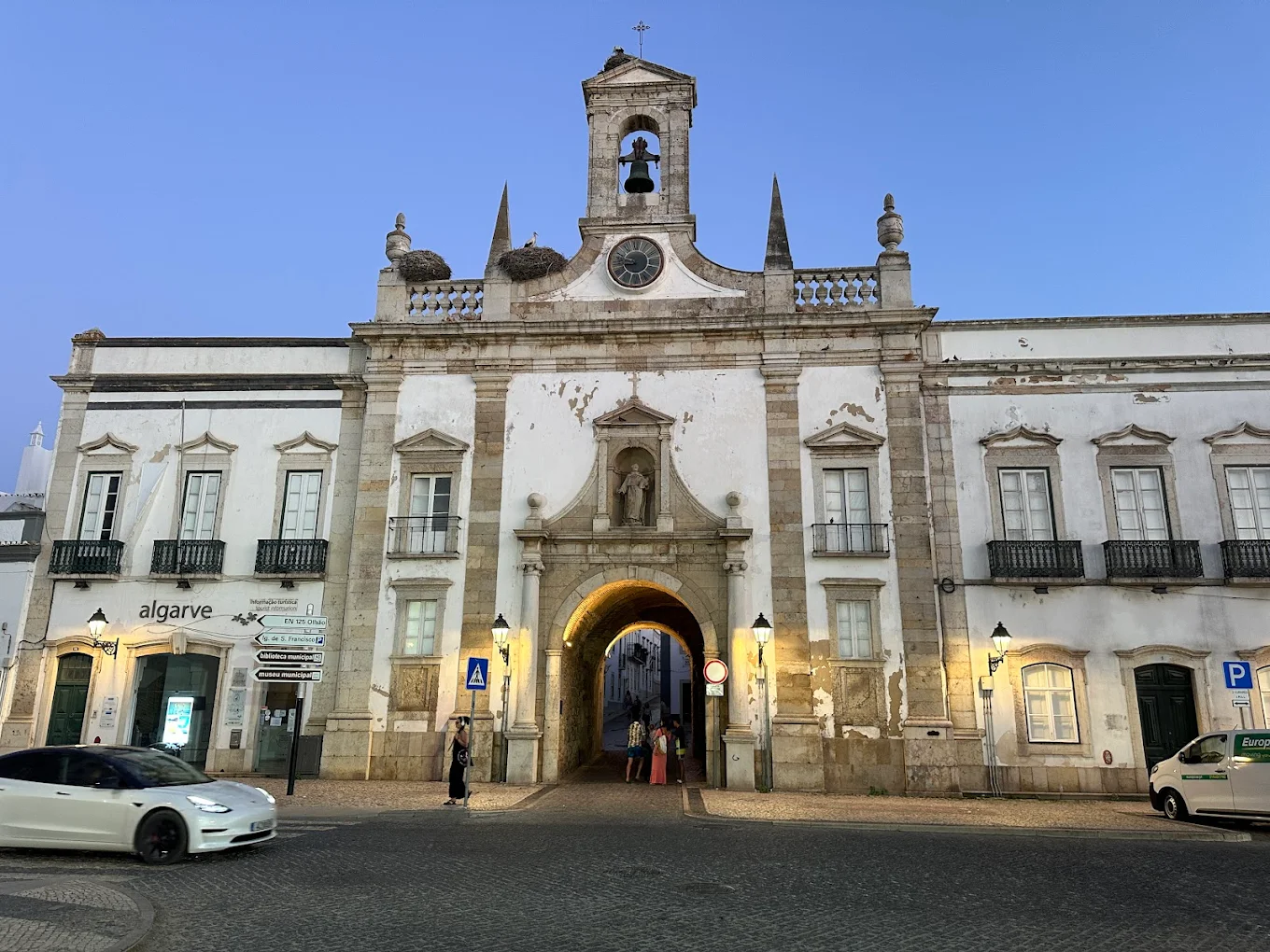
Arco do Repouso
A 12th-century Almohad gate that became the symbolic entrance to Faro's Old Town after Christian Reconquest in 1249. Twin barbican towers, a side chapel to Our Lady of Rest, and two enduring legends.
Verificado: 2026-02-16
Lugares que valen su tiempo — con información práctica para planificar rápido.
A 12th-century Almohad gate that became the symbolic entrance to Faro's Old Town after Christian Reconquest in 1249. Twin barbican towers, a side chapel to Our Lady of Rest, and two enduring legends.
Verificado: 2026-02-16
The remains of an opulent Roman villa near Estoi, inhabited from the 1st to 11th century — marble peristyle, fish mosaics, bath complex, and a 3rd-century temple. One of Portugal's most significant Roman sites.
Verificado: 2026-02-16
Faro's ceremonial neoclassical gate of 1812, designed by Genoese architect Francisco Xavier Fabri. Italian-style facade outside, original Moorish horseshoe arch inside — plus a stork-nested bell tower above.
Verificado: 2026-03-26
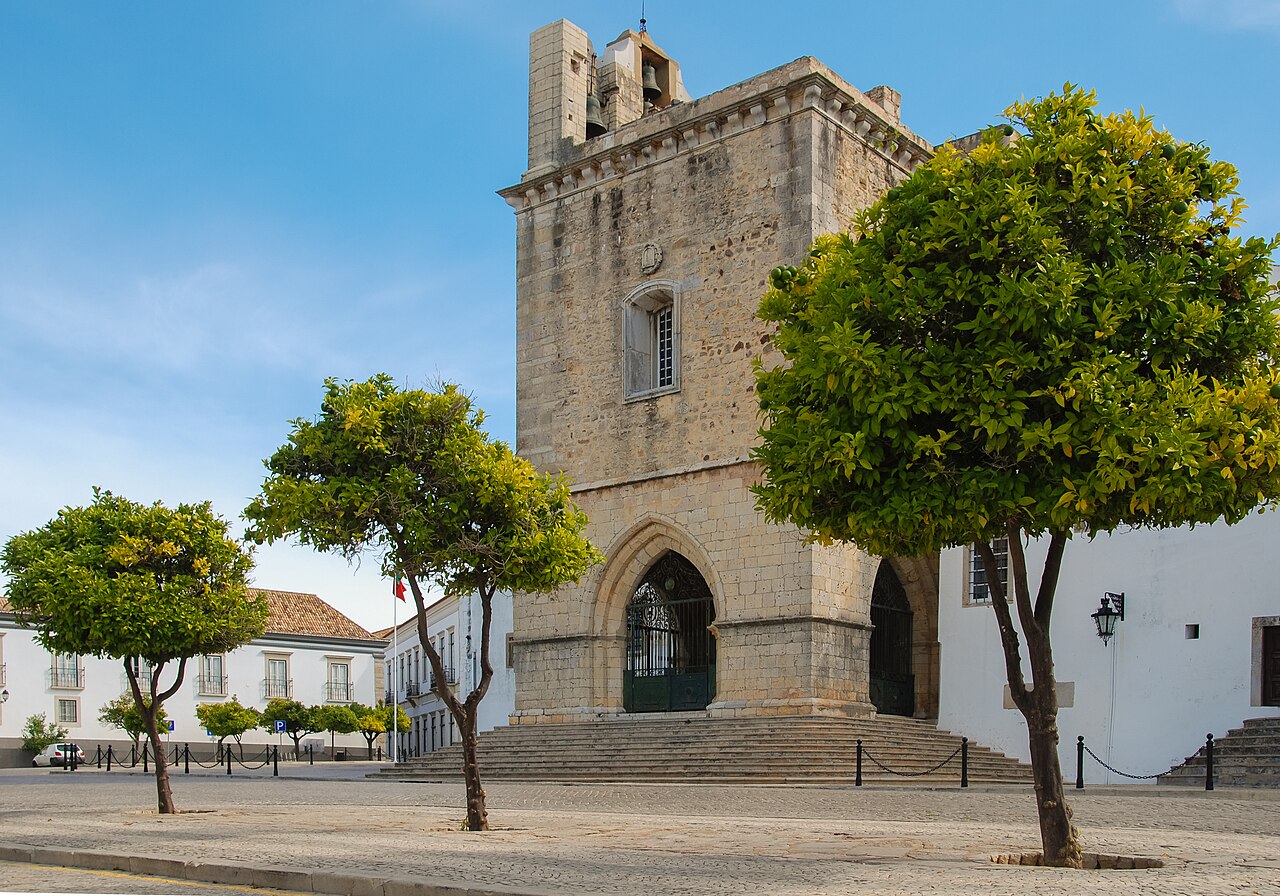
Faro's cathedral, founded in 1251 on the site of a Roman temple, Visigothic church and Moorish mosque. Gothic exterior, Renaissance and Baroque interior, gilded carvings, and a bell tower with the best view over the Old Town and Ria Formosa.
Verificado: 2026-06-04
A 18,400-hectare lagoon and wetland system protected as a Natural Park since 1987 — four barrier islands, two peninsulas, 200+ bird species, the world's largest seahorse population, and one of Portugal's Seven Natural Wonders.
Verificado: 2026-03-26
Faro's city beach — a 5 km strip of golden sand on the barrier peninsula Ilha de Faro, 10 minutes from Faro Airport. Atlantic waves on one side, the Ria Formosa lagoon on the other, lined with beach bars and seafood restaurants.
Verificado: 2026-03-26