
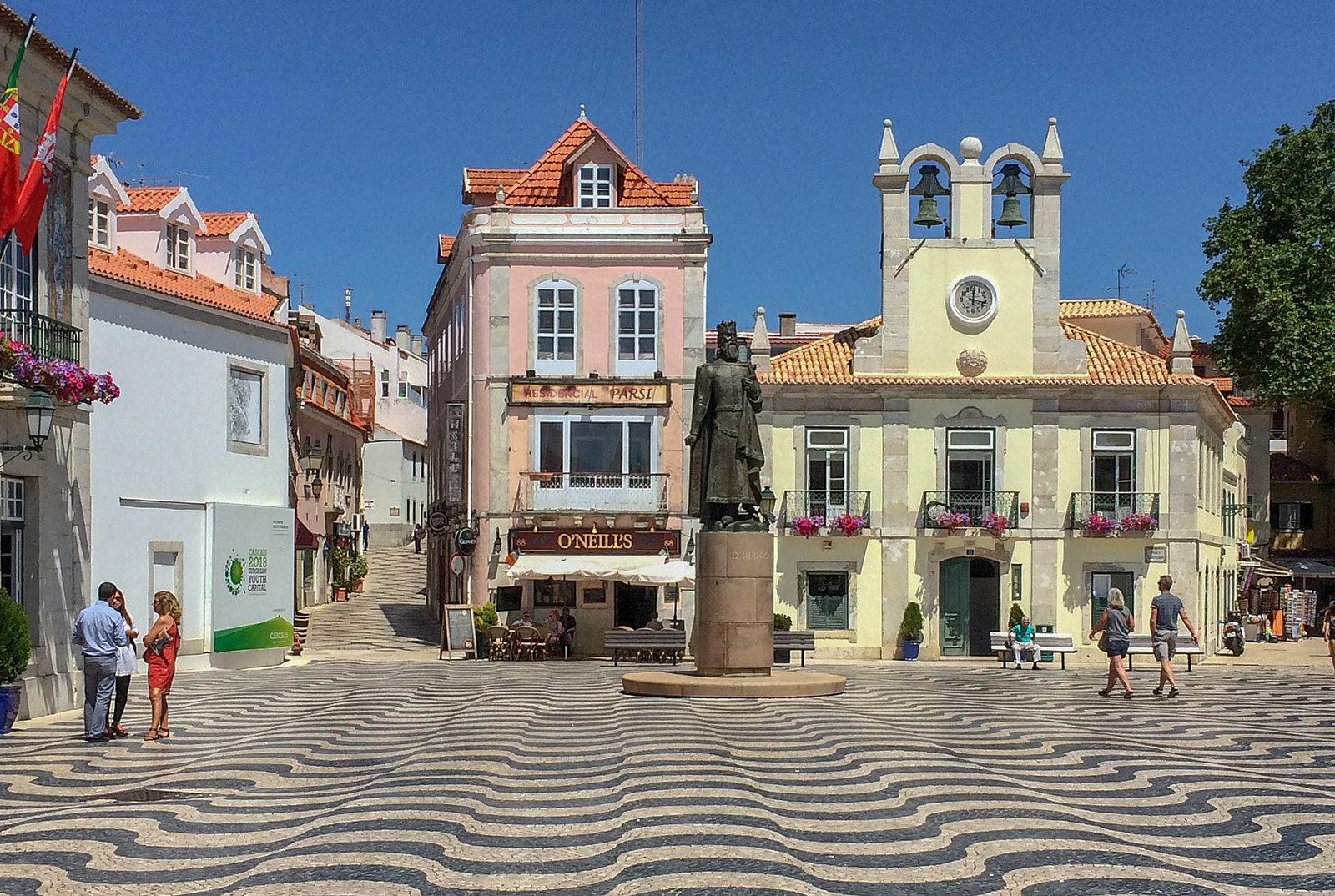
Cascais grew from a fishing village, and its old town keeps that scale: a compact knot of pedestrian lanes paved in black-and-white calçada portuguesa, running back from the bay between bright-painted façades, tiled house-fronts and small squares.
Largo Luís de Camões and the streets around it hold the pavement cafés and restaurants; Rua Direita threads the boutiques; and by the water, fishing boats still come up onto the sand at Praia da Ribeira, in front of the fish auction that keeps the town honest. The town hall square, the Misericórdia church and the marble-checked Passeio Dom Luís I complete the set.
It is the natural first hour of any visit — coffee, a wander, the seafront — and the departure point for everything else: the citadel and marina at one end, the museum quarter and Boca do Inferno beyond.
Highlights
- Pedestrian lanes paved in Portuguese calçada
- Pavement cafés around Largo Luís de Camões
- Fishing boats and auction at Praia da Ribeira
- Boutiques along Rua Direita
- Gateway to the citadel, marina and museum quarter
History & context
A fishing port since the Middle Ages, Cascais changed forever in 1870 when King Luís I made the citadel his summer residence, drawing the court and its villas; the old town has balanced fishing-village bones and resort polish ever since.
🗓️ Best time to visit
Morning for quiet streets and the fish market bustle; evening for dinner and the lit seafront.
⏱️ Duration
1–2 hours
♿ Accessibility
Flat and compact; mosaic paving is smooth but can be slippery when wet.
Frequently asked questions
How long does the old town take?
An hour at a stroll covers the lanes, squares and seafront; most visitors return for dinner.
Is it pedestrianised?
The core lanes are pedestrian or near-traffic-free, paved in smooth mosaic stone — comfortable walking, though slippery when wet.