
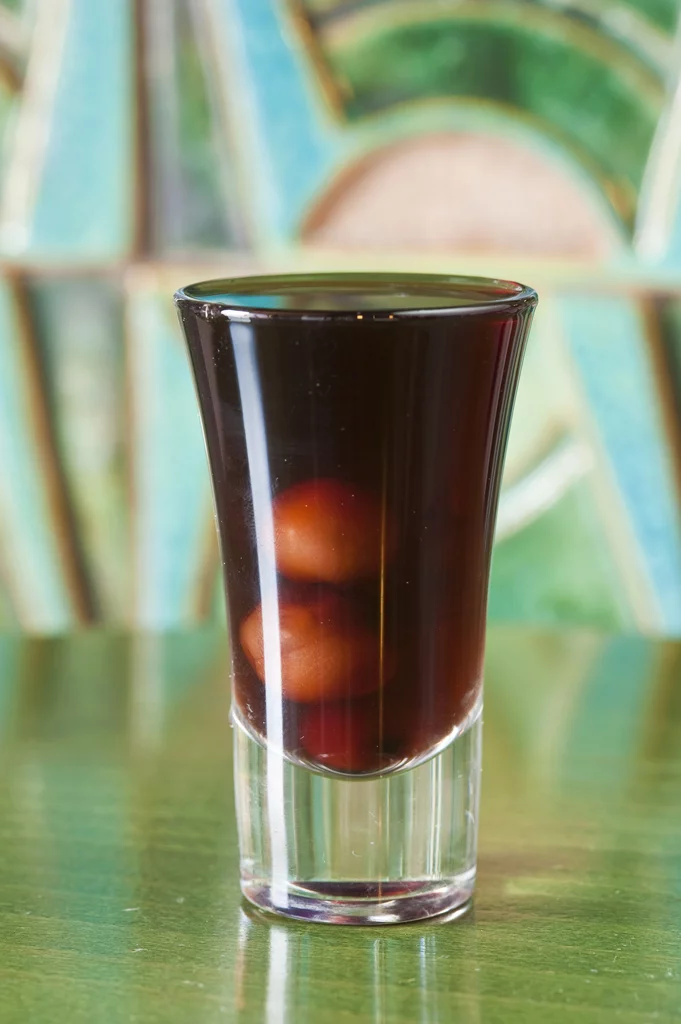
Ginjinha — pronounced "jeen-jeen-ya" — is Lisbon's beloved sour-cherry liqueur, made by infusing ginja cherries (a type of sour Morello cherry) in aguardente, sugar, and sometimes cinnamon or cloves for several months. The result is a sweet, deep-red shot with a slightly bitter cherry edge and around 18–23% alcohol.
The tradition began in 1840 when Francisco Espinheira, a Galician immigrant, opened a tiny counter on Largo de São Domingos and started selling the liqueur from a single window. That shop — A Ginjinha — is still there, still operates from the same cramped counter, and still serves the same recipe handed down through six generations. The crowd spills out onto the square day and night.
Across the square, Ginjinha Sem Rival (since 1890) and a few doors away Ginjinha Espinheira keep the same tradition alive. None of them have tables. You order at the counter — "uma ginjinha, com elas" (with a cherry) or "sem elas" (without) — drink it standing up, often in 30 seconds, and step out into the square.
A shot costs €1.50, served in a small plastic or shot glass. The cherry at the bottom (if you ordered "com elas") has been soaking for months and is intensely flavoured — bite into it at the end of the shot. Some locals chase it with a small espresso.
Beyond Lisbon, the village of Óbidos serves its own famous version in tiny chocolate cups (you drink the liqueur and eat the cup). Both versions appear at every festival and are a fixture of cold winter days.
⭐ Must-try:
Ginjinha com elas — a shot with a sour cherry in the bottom that you bite into at the end
Signature dishes
- Ginjinha com elas (with a soaked sour cherry)
- Ginjinha sem elas (without cherry)
- Ginjinha em copo de chocolate (in chocolate cup — Óbidos style)
- Ginjinha e bica (paired with espresso)
Highlights
- Sour-cherry liqueur made with ginja (Morello) cherries
- Around 18–23% alcohol; sweet with a slightly bitter edge
- Tradition started 1840 at A Ginjinha, Largo de São Domingos
- Served in shot glasses at standing-bar counters (no tables)
- Order "com elas" for a soaked cherry to bite at the end
- Typical price: €1.50 per shot
- Drunk in 30 seconds, standing up, often in the street
- Famous variant in Óbidos: served in edible chocolate cups
- A classic before or after meals, or on cold days
- Contains alcohol and added sugar
Dietary options
✓ Vegan
✓ Gluten-free
✓ Dairy-free
✓ Nut-free
✓ Contains alcohol
✓ Contains added sugar
Frequently asked questions
How do you order ginjinha in Lisbon?
Walk up to the counter and say "uma ginjinha" (one ginjinha). The server will ask "com elas ou sem elas?" — "com elas" means with a soaked cherry at the bottom (recommended for first-timers), "sem elas" means without. Pay €1.50, drink standing up, and step outside. No tables, no fuss.
Where are the most authentic ginjinha bars in Lisbon?
A Ginjinha at Largo de São Domingos 8 is the original (since 1840) — tiny counter, always crowded. Ginjinha Sem Rival, also on the same square, dates from 1890 and is equally authentic. Ginjinha Espinheira is the third historic spot. All three are within 50 metres of each other and worth visiting in sequence.
What's the difference between ginjinha and other Portuguese liqueurs?
Ginjinha is specifically made from ginja (sour Morello cherries), with a sweet but slightly bitter profile. It's distinct from licor beirão (herbal liqueur from the Beiras region), aguardente (clear grape spirit), or porto (fortified wine). Ginjinha is sweeter and more accessible to non-spirit drinkers than aguardente, and unlike port it's drunk in shots rather than glasses.
Why is ginjinha served in chocolate cups in Óbidos?
Óbidos has its own ginjinha tradition where the liqueur is poured into a small edible dark chocolate cup. You drink the shot first, then eat the cup. It became popular as a festival treat and is now sold year-round throughout the medieval town. The combination of sweet cherry and bitter chocolate works surprisingly well.
Can I take ginjinha home from Portugal?
Yes — all three Lisbon ginjinha shops sell sealed bottles (typically 70cl) for about €10–€15, perfect as souvenirs. They keep for years unopened. Once opened, store in a cool dark place and drink within a year for the best flavour.