
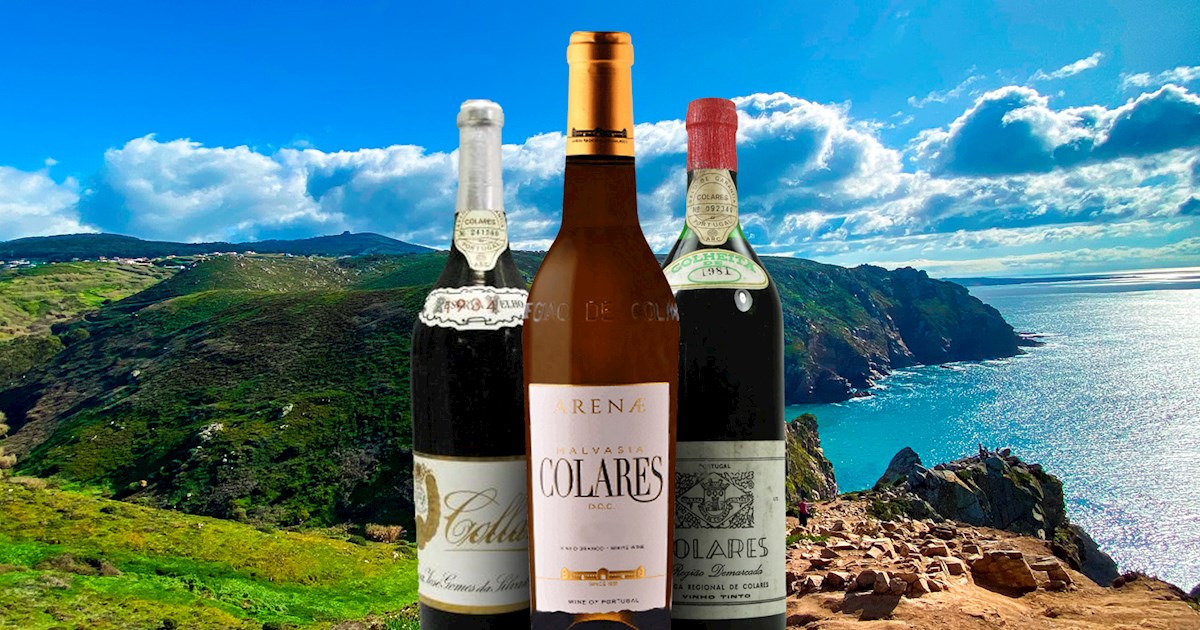
Colares is one of Europe's most extraordinary wine regions — a tiny demarcated zone of less than 20 hectares hidden in the sand dunes along the Atlantic coast of Sintra municipality, where ungrafted European vines have been producing wine continuously since at least the 13th century. Officially demarcated in 1908, it is one of Portugal's oldest DOC (Denominação de Origem Controlada) regions and the only one where most vines remain on their original European rootstock — the catastrophic phylloxera louse that destroyed Europe's vineyards in the 1860s–1880s could not survive in the deep coastal sand.
The vines are planted up to 8 metres below the dune surface, in clay soil beneath the sand. Workers dig deep trenches to plant each vine, then gradually fill them in with sand as the plant grows — a method called "chão de areia" that has changed little in 800 years. The result is two grape varieties that exist almost nowhere else: the rare red Ramisco (small, dark berries producing pale-coloured, intensely tannic wines that need decades to soften) and the white Malvasia de Colares (mineral, salty, fragrant, capable of ageing for 50+ years).
The region peaked at around 2,000 hectares in the 1930s and has shrunk dramatically as coastal land became more valuable for housing. Today fewer than 20 hectares remain, divided among a handful of producers — the Adega Regional de Colares cooperative (founded 1931), Viúva Gomes (founded 1808), Casca Wines, and a few smaller family estates. Production is tiny — typically 30,000–50,000 bottles a year region-wide — and most bottles are released only after 5–10 years of cellar ageing.
Prices range from €25 for younger releases to €150–€300+ for old library vintages from the 1960s and earlier. Adega Regional welcomes visitors for tastings.
⭐ Must-try:
Ramisco red (10+ years aged) paired with grilled lamb, or Malvasia white with seafood
Signature dishes
- Ramisco red (10+ years aged) — grilled lamb or aged cheese
- Malvasia de Colares white — grilled sardines, oysters, percebes
- Colares "Garrafeira" — special-reserve aged bottlings
- Adega Regional flight — guided tasting of 4–5 wines (€15–€25)
- Vintage library tasting — bottles from the 1960s–1980s (rare, by appointment)
Highlights
- One of Portugal's oldest DOC regions — demarcated 1908
- Phylloxera-free: ungrafted European vines, planted in deep coastal sand
- Two unique grape varieties: red Ramisco and white Malvasia de Colares
- Less than 20 hectares remaining today (down from 2,000 in 1930s)
- Vines planted up to 8 metres deep in clay below the sand dunes
- Wines aged 5–10 years before release; library vintages from the 1960s
- Adega Regional de Colares (founded 1931) welcomes visitors
- Tiny production: 30,000–50,000 bottles per year region-wide
- Pair Ramisco red with grilled lamb; Malvasia white with seafood
Dietary options
✓ Vegan (most Portuguese wines are vegan-friendly — confirm with producer)
✓ Gluten-free
✓ Dairy-free
✓ Contains sulphites
✓ Contains alcohol (~12–13%)
Frequently asked questions
What's so special about Colares wine?
Two things. First, the vines are phylloxera-free — they grow on their original European rootstock because the louse that destroyed Europe's vineyards in the 1860s could not survive in the deep coastal sand. Almost every other European wine region today uses American rootstock grafted onto European vines. Second, the two grape varieties (Ramisco red, Malvasia de Colares white) exist almost nowhere else on Earth, producing wines unlike anything else in Portugal.
Where can I taste Colares wine?
Adega Regional de Colares (Alameda Coronel Linhares de Lima 32) is the easiest visit — open daily for tastings without appointment. Casca Wines welcomes visitors by appointment. The 1808-founded Viúva Gomes opens occasionally. Several wine bars in Sintra Vila (e.g., Páteo do Garrett) stock Colares wines by the glass — a good option without travelling to the cellars.
How does Colares wine taste?
Ramisco red is unusual — pale ruby in colour but tannic and intensely structured, often compared to old-school Nebbiolo or aged Pinot Noir. Young Ramisco is austere and needs decade-plus ageing to soften. The Malvasia white is mineral and salty (from the Atlantic proximity), with notes of dried apricot, almond and beeswax — it can age 50+ years.
Why is the Colares region disappearing?
Real estate. Colares sits on the Atlantic coast 25 km from Lisbon — some of the most expensive land in Portugal. Vineyard owners face strong financial incentives to sell to developers. The Portuguese government has put some protection in place but the region has shrunk from 2,000 hectares in 1930 to less than 20 today. Buying and drinking Colares wine helps the remaining producers survive.
How much should I expect to pay?
New releases from Adega Regional or Casca Wines: €25–€60 per bottle. Special bottlings or single-vineyard releases: €70–€150. Library vintages (1980s and older) at auction or specialist shops: €200–€500+. Tastings at Adega Regional are reasonably priced — usually €15–€25 for 4–5 wines including older vintages.