
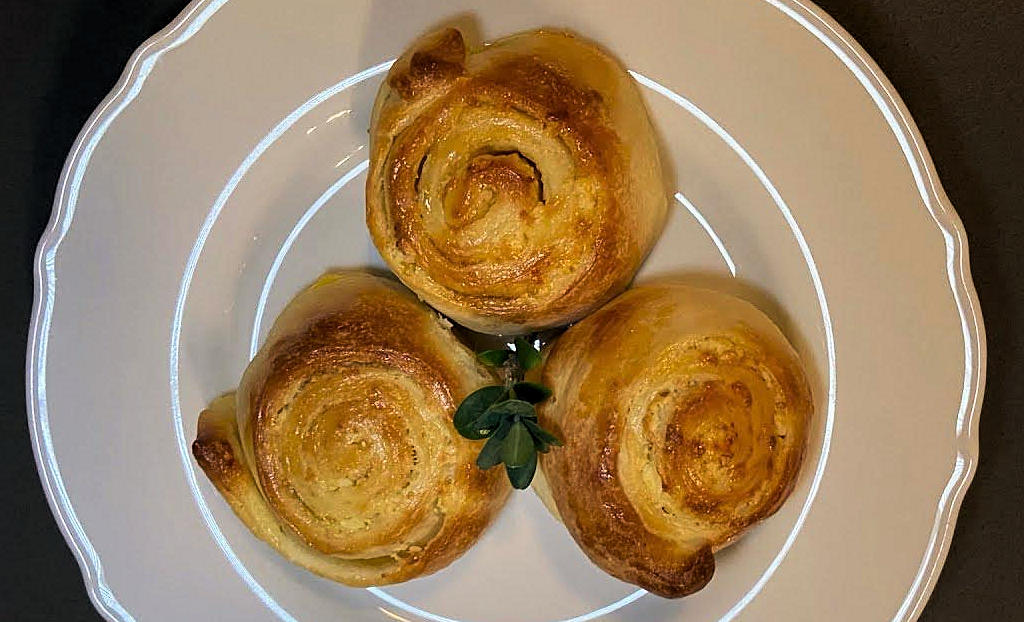
The folhados de Tavira are a traditional pastry of the town, and one of its oldest sweet specialities. They are small, rounded cakes of puff pastry, cut into strips and rolled, then baked and finished by being passed through a sugar syrup.
The folhados belong to Portugal's tradition of conventual sweets — recipes developed in convents, typically rich in egg yolks, sugar and almonds. According to oral tradition, the recipe originated in a convent of nuns in Tavira, founded in the early sixteenth century. The cakes were originally known simply as bolos folhados; the name folhados de Tavira was later given to them by the regular customers of a Tavira café where they were sold.
The recipe was carried on through generations of one family. Today the folhados are still made by hand, a sweet, flaky link to the convent kitchens of Tavira's past and a fitting souvenir of a visit to the town.
⭐ Must-try:
Estrelas de Tavira
Highlights
- Traditional rolled puff-pastry cakes of Tavira
- Finished by passing through a sugar syrup
- Rooted in Portugal's conventual sweet-making tradition
- Recipe traditionally traced to a Tavira convent
- Still made by hand — a characteristic local sweet
Frequently asked questions
What are folhados de Tavira?
They are small rounded cakes of rolled puff pastry, baked and then passed through a sugar syrup — a traditional sweet of Tavira.
Where does the recipe come from?
Oral tradition traces the recipe to a convent of nuns in Tavira, part of Portugal's wider tradition of conventual sweets.
Are folhados a good souvenir from Tavira?
Yes, they are one of the town's most characteristic sweets and are made by hand in the traditional way.