

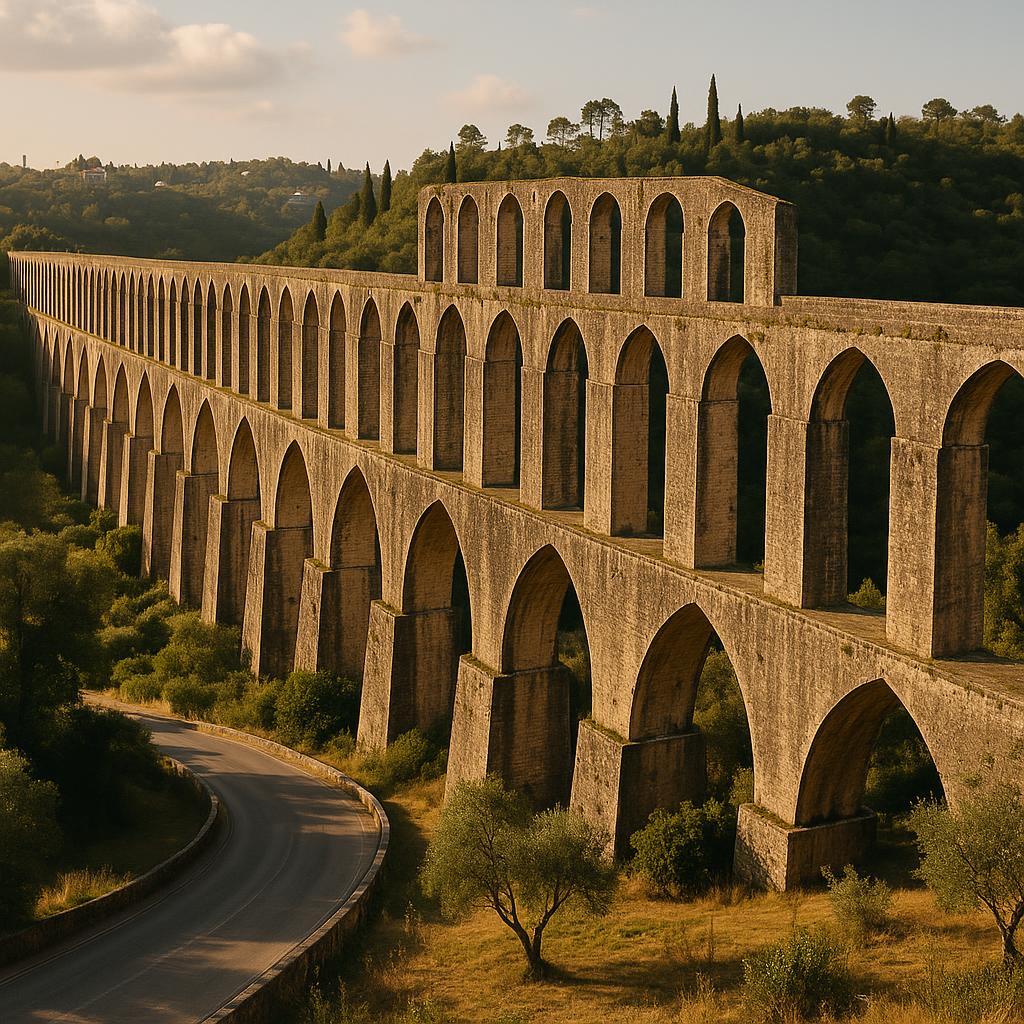
The Pegões Aqueduct in Tomar was built between 1593 and 1619 to supply fresh water to the Convent of Christ. This impressive structure showcases the ingenuity of Renaissance engineering in Portugal.
Understanding the Purpose of the Pegões Aqueduct
The Pegões Aqueduct is a remarkable example of Renaissance engineering aimed at addressing practical needs. Its primary purpose was to channel fresh water from various sources to the Convent of Christ, ensuring the monks and inhabitants had a steady water supply atop the hill where the convent is located. This task required significant planning and execution, leading to the construction of a structure that stretched over 6 kilometers.
The Fascinating Architecture
The aqueduct consists of 180 arches, with its tallest sections featuring double arches reaching up to 30 meters in height. This architectural feat not only reflects the aqueduct’s functional purposes but also illustrates the aesthetic ambitions of the time. Walking along the aqueduct, you can appreciate the skill and effort that went into creating such a monumental piece of infrastructure. It remains one of the most striking features of Tomar’s landscape.
Transporting Water in the Renaissance Era
Transporting water efficiently in the late Renaissance period was a complex task requiring not only engineering expertise but strategic planning. The Pegões Aqueduct’s design allowed it to traverse varying terrains, maintaining water flow over long distances. This project illustrates the advanced understanding of materials and gravity-based water transportation prevalent at the time.
Visiting the Pegões Aqueduct
Accessing the aqueduct is relatively straightforward. Visitors can reach it on foot from the Parque do Mouchão, located below Tomar. The walk offers a scenic route that sets the stage for encountering this magnificent structure. Once there, you can traverse a section of the aqueduct, taking in views of the surrounding countryside and marveling at the construction techniques used centuries ago.
Half-Day Itinerary: Experiencing Tomar and the Aqueduct
Start your morning with a visit to the Convent of Christ, a UNESCO World Heritage site where the aqueduct delivered water. Spend around two hours exploring its unique architecture and historical significance. Next, take a short walk to the Pegões Aqueduct from Parque do Mouchão to appreciate this engineering marvel.
- 9:00 AM – Arrive at Tomar and savor a local breakfast.
- 10:00 AM – Tour the Convent of Christ.
- 12:00 PM – Head to Parque do Mouchão and walk to the Pegões Aqueduct.
- 1:30 PM – Enjoy a leisurely lunch at a nearby café.
- 3:00 PM – Explore the historic center of Tomar.
For those seeking convenience, consider hiring a private driver to navigate the area efficiently. This allows you more time to immerse yourself in Tomar’s rich culture and history.
More Historic Highlights in Tomar
Aside from the aqueduct and the Convent of Christ, Tomar offers numerous attractions. The city center is a charming area filled with history, including the Praça da República and the Igreja de São João Baptista. Each site adds layers to the story of Tomar, reflecting its importance in Portuguese history.
Frequently Asked Questions
Is the Pegões Aqueduct accessible year-round?
The aqueduct can typically be accessed throughout the year, but it’s best to check local resources for any restrictions.
Can I walk the entire length of the aqueduct?
While you may explore sections of it, some parts may not be accessible for safety reasons.
For more information about Tomar and its attractions, visit our City Hub.
Conclusion
The Pegões Aqueduct in Tomar is not just a functional construct but a symbol of the ingenuity and dedication of its time. As a visitor, walking its length offers a unique glimpse into the past and a deeper appreciation for this magnificent era of engineering. Whether you’re a history enthusiast or a casual traveler, the aqueduct is an essential stop on your journey through Portugal.


Leave a Reply