
GoToo · Portugal
Douro Valley Tours from Porto, private wine day trips
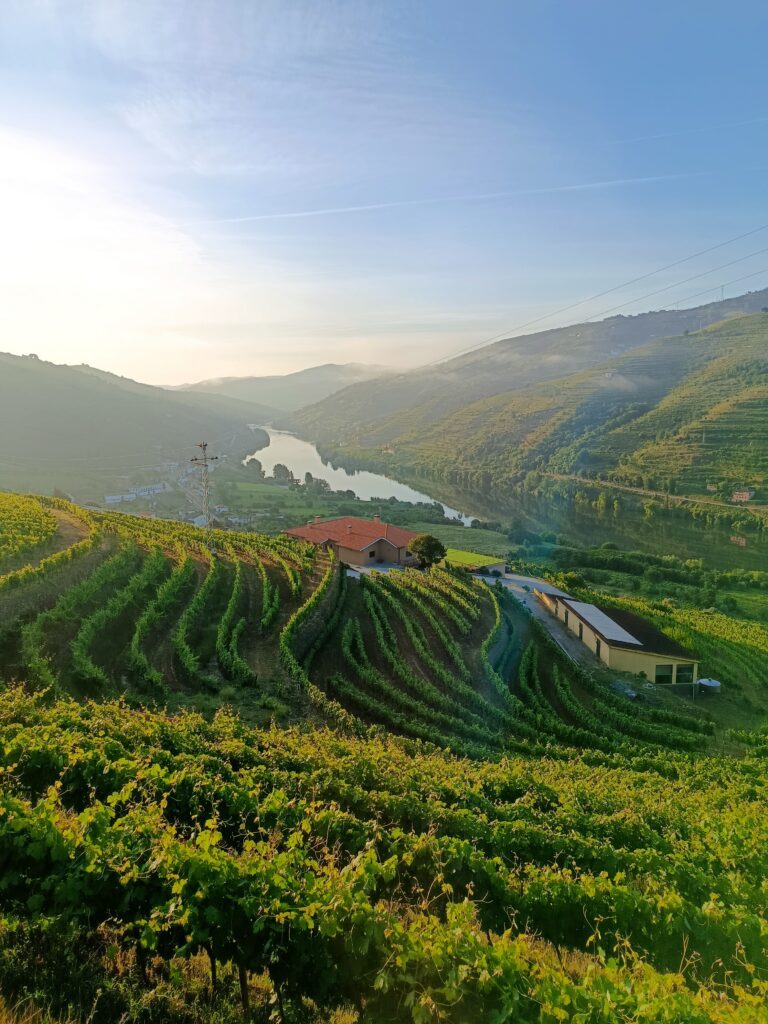
In short. A private Douro Valley tour from Porto takes you east into terraced vineyards, port wine quintas and riverside villages, all with a dedicated driver who picks you up at your hotel and brings you home the same evening. You set the departure time, choose which estates to visit and stop for lunch when it suits you, no coach, no crowd and no schedule but your own.
This guide explains how the tours work, what to expect at a quinta, which route offers the best scenery and why booking a licensed travel agency makes all the difference.
Why visit the Douro Valley from Porto
The Douro Valley is the oldest demarcated wine region in the world. Steep schist hillsides rise above the Douro River, covered in dry-stone terraces that date back centuries. Port wine was born here, and the tradition remains, families still harvest by hand, tread grapes in lagares and age their wines in lodges along the river.
From Porto, you climb inland through pine and eucalyptus, emerging at Mesão Frio or Peso da Régua, where the valley opens wide and vines march down to the water. The scenery alone justifies the journey. Add a tasting at two or three quintas, a riverside lunch and a few stops at viewpoints, and you have one of Portugal's most memorable day trips.
Group coaches rush through on a fixed timetable. A private tour lets you linger, ask questions and detour to that lookout no one else bothers with.
How a private Douro Valley tour works
Your driver meets you at your Porto address, hotel lobby, apartment or cruise terminal. Departure time is up to you; most people leave between eight and nine in the morning to reach the first quinta by mid-morning, when light is soft and the tasting room uncrowded.
The journey follows either the north or south bank of the Douro. The south bank, via the A4 motorway, then the N222, is faster and delivers the classic postcard views. The north bank stays closer to the water and passes more villages, though the road is narrower. Many drivers combine both, taking one route out and the other back.
You visit two or three quintas, depending on the length of your tour and your appetite for tasting. Each stop lasts around an hour: a walk through the vineyard or cellar, a short talk about port-making and a flight of four or five wines. Some estates offer olives, almonds or local cheese alongside the tasting. Others include a guided tour of their lodge or chapel.
Lunch is usually in Pinhão or Peso da Régua, where restaurants serve grilled octopus, roast kid and salt cod. Your driver can book a table or recommend a place. After lunch, a second or third tasting, perhaps a photo stop at the São Leonardo da Galafura viewpoint, and you roll back into Porto by late afternoon or early evening.
What happens at a quinta
A quinta is a wine estate. In the Douro, they range from family-run farms with a single quinta label to grand properties owned by the big port houses. Most open their doors to visitors by appointment, and many have built modern tasting rooms alongside 18th-century lagares and ageing cellars.
You start with a walk. The guide explains why port is fortified, how terraces are cut and planted, and which grape varieties thrive on schist. If you visit in September, you might see harvest in action. Otherwise, it is all about the view, row upon row of vines descending to the river, turning gold in autumn or bright green in spring.
Then comes the tasting. Typically a white port served chilled, a ruby or reserve, a tawny aged ten or twenty years, and sometimes a vintage port. The guide pours small measures, explains the difference between ruby and tawny ageing, and encourages you to smell, swirl and sip slowly. You are not expected to finish every glass; spittoons are always available.
Most quintas sell their wines at estate prices. If you find a bottle you like, buy it there, you will not find the same wine cheaper in Porto.
North bank versus south bank
The south bank route is the classic. The A4 motorway takes you east from Porto, exiting at Amarante or Mesão Frio, then dropping onto the N222. That road hugs the river for thirty kilometres, with viewpoints every few bends and quintas dotting the slopes above. Traffic is light outside high season, and the tarmac is smooth.
The north bank is quieter and more winding. You cross the river at Peso da Régua or further west, following smaller roads through hamlets where stone houses wear slate roofs and vegetable gardens line the roadside. Views are often framed by trees rather than wide-open, which makes them feel more intimate. However, the road can be narrow, and in summer the shade is welcome.
Many drivers use one bank each way. That way, you see both perspectives without retracing your route.
Duration and timing
A full-day Douro Valley tour runs eight to ten hours, door to door. Driving time from central Porto to Peso da Régua is around ninety minutes each way, leaving four to six hours in the valley for tastings, lunch and stops.
Shorter tours, six hours, focus on the western end of the valley, visiting one or two quintas near Mesão Frio. Longer itineraries push east to Pinhão or even Tua, where the landscape becomes more arid and the terraces steeper. If you have time, the extra distance is worth it.
Mornings are cooler and less crowded. Arriving at the first quinta by ten thirty means you taste before the coach groups arrive and photograph terraces in soft light. Late-afternoon returns catch the golden hour on the river, when shadows stretch long across the vines.
What to bring
Comfortable shoes are essential. Quintas often involve uneven paths, gravel courtyards and stone steps. Sandals work in summer; closed shoes are safer if you plan to walk into the vineyard.
Sunglasses and a hat matter more than you expect. The valley is hot and bright from May to September, with little shade on the terraces. Sunscreen is a good idea, even if you think you will stay indoors.
Bring water. Your driver will have some, but tastings can be dehydrating, and the valley is dry. A small daypack for a jacket, camera and any bottles you buy keeps the car tidy.
If you plan to buy wine, consider bringing bubble wrap or a padded sleeve. Most quintas pack bottles in cardboard, but an extra layer of protection helps if you are checking luggage later.
Comparing your options
| Service type | Price model | Group size | Flexibility |
|---|---|---|---|
| Private tour (licensed agency) | Fixed per vehicle | Up to 8 | Full, you choose quintas, timing and stops |
| Small-group tour | Per person | 8–16 | Limited, fixed itinerary, shared schedule |
| Coach tour | Per person | 40–50 | None, one or two stops, no deviation |
A private tour costs more per person if you travel alone, but the price per vehicle stays the same whether you are two or eight. For families or small groups, the per-head cost often falls below that of a small-group tour, and you gain complete control over the day.
Which quintas to visit
The Douro holds hundreds of estates, and only a fraction accept walk-in visitors. Many require advance booking, which your driver or agency arranges on your behalf. You do not need to pick estates weeks ahead; a few days' notice is usually enough, and your driver will suggest options based on your interests.
Some focus on traditional methods: foot-treading, granite lagares, ageing in old wooden casks. Others showcase modern winemaking with stainless-steel fermenters and climate-controlled cellars. A few combine both, blending heritage with innovation.
If you care more about landscape than labels, ask for quintas with terraces that run right to the river. If you want to taste vintage port, mention it when booking, not every estate pours its oldest stock on a standard tasting.
Most tours visit two quintas. Three is possible but feels rushed unless you skip lunch or extend the day to ten or eleven hours.
Lunch in the Douro
Peso da Régua and Pinhão both offer solid, traditional restaurants where portions are generous and wine lists run deep. Expect dishes like roasted lamb shoulder, octopus rice, bacalhau à Brás and alheira sausage. Most menus include a daily special, often based on what arrived fresh that morning.
Your driver can book a table in advance, which is wise in summer and at weekends. If you prefer a lighter meal, some quintas offer cheese and charcuterie platters paired with their wines. That saves time and keeps you on the property, which matters if the next tasting is nearby.
Lunch usually runs one to two hours. Restaurants here do not rush you; the pace is slow, the service friendly, and the bill modest by Porto standards.
River cruises versus road tours
Some visitors consider a river cruise instead of a road tour. Cruises depart from Peso da Régua or Pinhão, glide along the Douro for an hour or two, and return to the same dock. They offer a different perspective, terraces seen from below, quintas perched high above the water, bridges and locks up close.
However, cruises do not visit quintas. You see the valley, but you do not taste its wines or walk its terraces. A road tour takes you inside the estates, into the cellars and up among the vines. If wine matters more than water, choose the road.
That said, a short cruise after lunch makes a pleasant addition to a full-day tour. Your driver can drop you at the dock, wait while you sail, and collect you when you return. It adds an hour or two to the itinerary, but the combination is hard to beat.
Why book with GoToo
GoToo is a licensed Portuguese travel agency (RNAVT 10586), not a taxi service or ride-hailing platform. Every vehicle is insured for passenger transport, every driver speaks English and holds the required tourism credentials, and every booking is protected under Portuguese travel law.
You pay a fixed price per vehicle, confirmed at the time of booking. There are no surge fees, no per-person add-ons and no surprises when the driver arrives. Whether you are two or eight passengers, the price stays the same.
If your inbound flight is delayed, your driver tracks it and waits up to 90 minutes after landing at no extra charge. If your hotel is hard to find or your cruise ship docks late, the driver adjusts. Meet and greet is standard, and door-to-door service means you start and end the day without navigating public transport or hailing a cab.
For context, TVDE services such as Uber or Bolt operate under a different regulatory framework and may not offer the same level of insurance or professional driver qualifications for full-day tours.
Best time of year to visit
The Douro Valley rewards visitors in every season, but each brings a different mood. Spring, April and May, is green and mild, with wildflowers dotting the terraces and vines just leafing out. Temperatures sit in the low twenties, perfect for walking.
Summer is hot. July and August see temperatures above thirty-five degrees, and the valley floor bakes under a relentless sun. Tastings become more welcome, air-conditioned cellars a relief. If you visit in high summer, start early and return by mid-afternoon.
Harvest runs from late August through September. Quintas buzz with activity, and some invite visitors to tread grapes in the lagares. The atmosphere is festive, the light golden, and the valley smells of crushed fruit and fermentation.
Autumn, October and November, turns the vines red, orange and yellow. The river reflects the colours, and the air cools. Crowds thin, and quintas have more time for each visitor. Winter is quiet and often beautiful, though some estates close or reduce their hours.
What the tour does not include
The tour price covers the vehicle, driver and fuel. It does not include tasting fees, lunch, drinks or entrance tickets where applicable. Most quintas charge for tastings; fees vary but typically range from modest to moderate, depending on the wines poured and whether the visit includes a guided tour of the estate.
Your driver can advise on current tasting fees and help you choose quintas that match your budget. Some estates waive the fee if you buy a bottle; others include it in the price of a tour. Either way, tasting fees are paid directly at the quinta, in cash or by card.
Lunch is on you. Restaurants in the Douro are reasonably priced, and a full meal with wine rarely costs more than a modest dinner in Porto. Your driver will recommend places and can book ahead if you ask.
Booking your tour
Booking a private Douro Valley tour through GoToo is straightforward. You enter your pickup address in Porto, select the tour duration, typically eight or ten hours, and receive an instant quote. The price is fixed and includes all driving, waiting time and the return journey.
Once booked, you will receive confirmation with your driver's contact details. A day or two before departure, your driver will reach out to confirm the pickup time and ask if you have any preferences for quintas or stops. You can request specific estates, ask for viewpoints or note any dietary needs for lunch recommendations.
On the day, the driver meets you at your address. You travel in a comfortable, air-conditioned vehicle, usually a sedan, estate or minivan, depending on group size. Water is provided, and the driver carries maps, local knowledge and a list of vetted quintas.
If you are also planning travel between cities, GoToo offers private transfers from Lisbon to Porto, combining intercity transport with the same level of service and fixed pricing.
Frequently asked questions
How long does a Douro Valley tour from Porto take
A full-day tour typically lasts eight to ten hours, including roughly three hours of driving (total round trip), two or three quinta visits, lunch and photo stops. Shorter six-hour tours focus on the western valley, while longer itineraries reach Pinhão or beyond.
Can I choose which quintas to visit
Yes. Your driver will suggest estates based on availability, your interests and the route, but you are free to request specific quintas. Most require advance booking, so mention your preferences when you confirm the tour.
Is lunch included in the tour price
No. The tour covers the vehicle, driver and fuel. Lunch, tasting fees and drinks are paid separately. Your driver can recommend restaurants and book a table in advance if you wish.
What is the best time of year to visit the Douro Valley
Spring and autumn offer the most comfortable weather and beautiful scenery. Harvest season, late August through September, adds the excitement of grape-picking and treading. Summer is hot but doable if you start early. Winter is quiet and can be lovely, though some estates close.
How many quintas can I visit in one day
Two quintas is standard for an eight-hour tour. Three is possible if you skip a long lunch or extend the day, but each tasting deserves time. Rushing through three estates often feels less rewarding than savoring two.
Do I need to book in advance
Yes. Most quintas require reservations, and your driver arranges those once your tour is confirmed. Booking a few days ahead is usually sufficient, though high season and weekends fill faster. The vehicle itself should be booked as early as possible, especially in summer.
Can children join a Douro Valley tour
Absolutely. Children are welcome, and quintas often have grounds to explore, though tastings are adults-only. Some estates offer grape juice or soft drinks for younger visitors. Let your driver know if you are traveling with children so they can suggest family-friendly stops.
Is the tour suitable for people who do not drink alcohol
Yes. The Douro Valley is stunning regardless of whether you taste the wines. Many quintas produce olive oil, and the scenery, architecture and history stand on their own. Your driver can suggest estates with beautiful grounds or historic cellars where the visit is as much about the place as the product.
Plan your journey
Explore this city with GoToo


Ready to plan without stress?
Use the tags above to open the right city page, or request a quote and we’ll help you plan.