Roman Temple of Évora
Fourteen Corinthian columns from the 1st century AD, the best-preserved Roman temple in Portugal, standing improbably intact in the heart of the city it has watched for two thousand years.
Verified: 2026-06-04
The Roman temple, the cathedral, the Chapel of Bones, the Água de Prata aqueduct and the old university.

Fourteen Corinthian columns from the 1st century AD, the best-preserved Roman temple in Portugal, standing improbably intact in the heart of the city it has watched for two thousand years.
Verified: 2026-06-04

The largest medieval cathedral in Portugal, a granite Romanesque-Gothic fortress begun in 1186, climb to the roof terraces for the best view over the white city and the Alentejo plain.
Verified: 2026-06-04

The famous 17th-century chapel lined with the bones and skulls of some 5,000 dead, built by Franciscan monks as a meditation on mortality, 'We bones that are here, for yours we wait.'
Verified: 2026-06-04

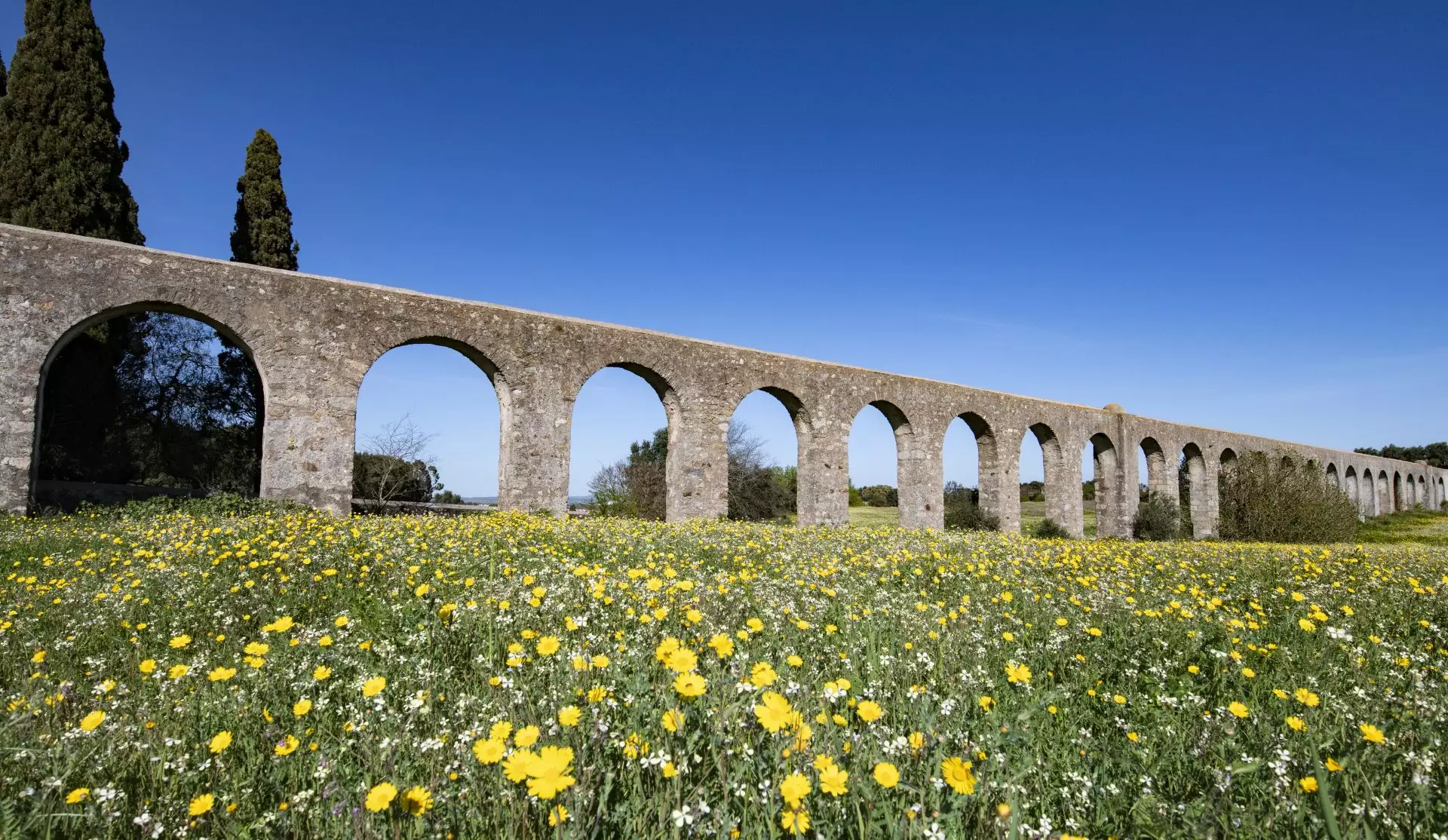
The 'Silver Water' aqueduct of the 1530s strides nine kilometres into the city, its final arches swallowed by houses and shops built right into the arcade, one of Évora's most photogenic quirks.
Verified: 2026-06-04

Portugal's second-oldest university, founded by Jesuits in 1559, a Renaissance cloister of marble columns and classrooms walled in baroque azulejos, still teaching after four and a half centuries.
Verified: 2026-06-04
Évora's main square, lined with arcades and cafés, with a Renaissance fountain and the Church of Santo Antão.
Just outside Évora, one of the largest groups of prehistoric standing stones in Europe, set among cork oaks.