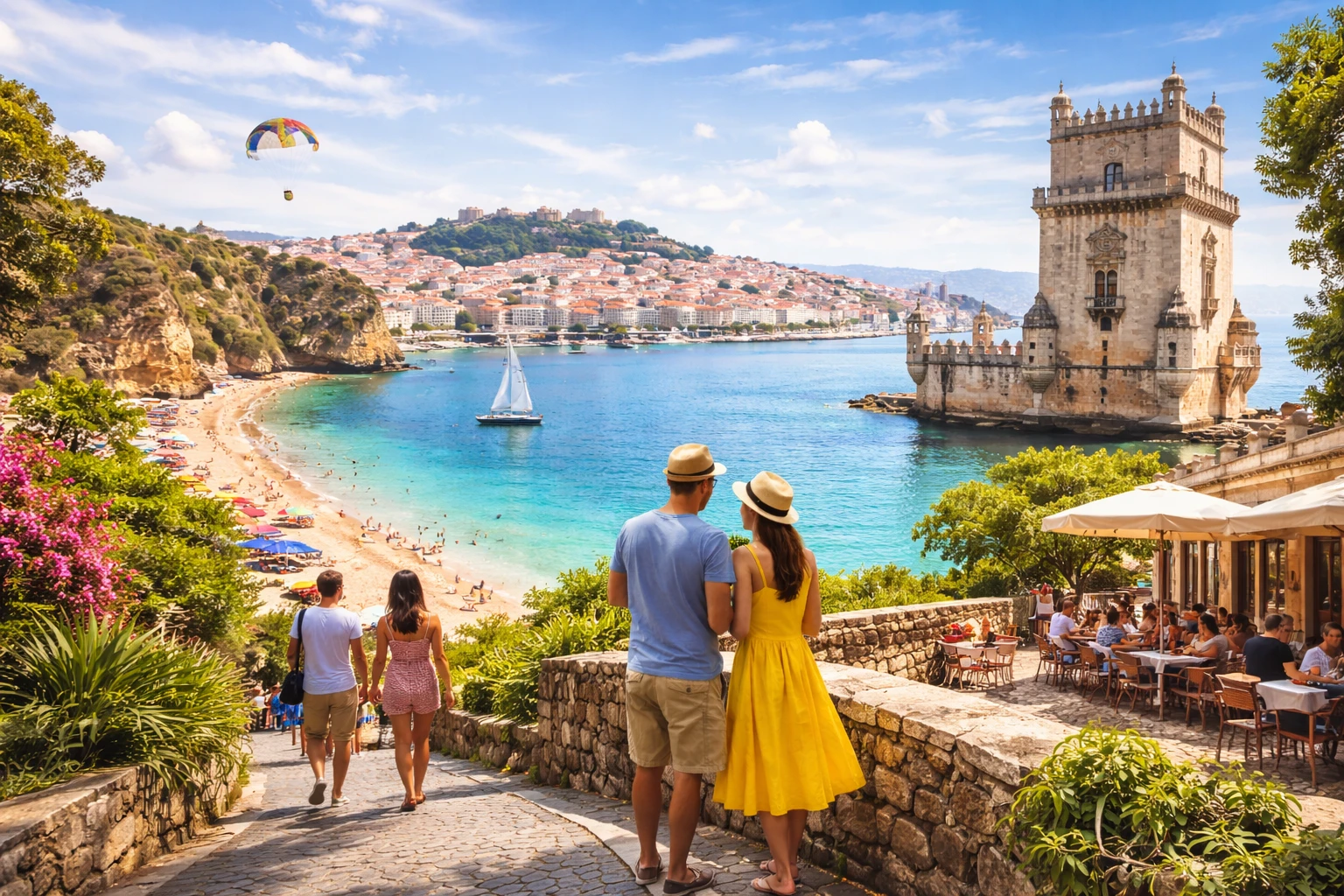
Explore the best of Salvaterra de Magos

Salvaterra de Magos is a destination in Portugal, about 51 km from Lisbon Airport.

Weather 18°C · Mostly clear
Lisbon time 06:30 • 23 Sep 2026
Nearest airport Lisbon Airport (LIS) · 51 km
Distance to airports LIS 51 km OPO 309 km FAO 294 km
Population 23,084
Region

Landmarks · Cuisine · Hotels

Salvaterra de Magos historic landmarks

Historic landmarks

Main monuments, best viewpoints, and what’s worth your time in Salvaterra de Magos.

View landmarks
Salvaterra de Magos local cuisine

Delicious cuisine

What to eat, where locals go, and quick “must-try” food in Salvaterra de Magos.

View cuisine
Salvaterra de Magos Royal Palace Ruins
Salvaterra de Magos Royal Palace Ruins is a standout architectural landmark in Salvaterra de Magos, offering a window into centuries of aristocratic heritage and refined design. The combination of gardens, period interiors, and grounds usually creates a visit that rewards both architecture enthusiasts and those simply looking for a scenic setting. For a visitor building an itinerary around Salvaterra de Magos, Salvaterra de Magos Royal Palace Ruins works well as either a central stop or part of a broader route through nearby highlights. A slower visit usually pays off here, because the landmark is not only something to see but also something to feel within its surroundings. Overall, Salvaterra de Magos Royal Palace Ruins deserves its place on a Salvaterra de Magos itinerary because it combines recognisable appeal with enough substance to leave a lasting impression.
Church of Nossa Senhora do Carmo
Church of Nossa Senhora do Carmo is a meaningful stop in Salvaterra de Magos, combining architecture, local devotion, and the quiet atmosphere that often defines historic religious sites. Even a short visit can reveal craftsmanship, proportion, and a quieter rhythm that contrasts nicely with the street outside. In practical terms, Church of Nossa Senhora do Carmo fits easily into a wider visit to Salvaterra de Magos, whether you are planning a short stop or a slower half-day experience. A slower visit usually pays off here, because the landmark is not only something to see but also something to feel within its surroundings. Overall, Church of Nossa Senhora do Carmo helps make a visit to Salvaterra de Magos feel more complete, adding scenery, identity, and a clearer sense of what makes the destination memorable.
Tagus Floodplains
Tagus Floodplains gives Salvaterra de Magos a wider environmental dimension, making it appealing for walks, observation, and a more relaxed kind of sightseeing. Nature-focused stops like this often become highlights precisely because they slow the pace and widen the experience. In practical terms, Tagus Floodplains fits easily into a wider visit to Salvaterra de Magos, whether you are planning a short stop or a slower half-day experience. The experience tends to improve when you are not rushing, as the setting, views, and smaller details are part of what gives the place meaning. Overall, Tagus Floodplains deserves its place on a Salvaterra de Magos itinerary because it combines recognisable appeal with enough substance to leave a lasting impression.
Salvaterra de Magos Old Town
Salvaterra de Magos Old Town is one of the best places to begin in Salvaterra de Magos, because it brings together architecture, atmosphere, and the rhythm of local streets in one area. This is usually where the destination feels most legible, with streets, facades, small details, and local businesses all reinforcing the identity of the place. For a visitor building an itinerary around Salvaterra de Magos, Salvaterra de Magos Old Town works well as either a central stop or part of a broader route through nearby highlights. The experience tends to improve when you are not rushing, as the setting, views, and smaller details are part of what gives the place meaning. Overall, Salvaterra de Magos Old Town is a strong addition to any visit to Salvaterra de Magos: accessible, distinctive, and capable of giving the destination more depth than a quick checklist stop.
Falconry Museum
Falconry Museum gives visitors a fuller picture of Salvaterra de Magos, turning a simple walk through town into a more informed and rewarding experience. It helps turn the destination into a story, especially if you want to understand local traditions, heritage, or how the town evolved over time. For a visitor building an itinerary around Salvaterra de Magos, Falconry Museum works well as either a central stop or part of a broader route through nearby highlights. A slower visit usually pays off here, because the landmark is not only something to see but also something to feel within its surroundings. Overall, Falconry Museum is a strong addition to any visit to Salvaterra de Magos: accessible, distinctive, and capable of giving the destination more depth than a quick checklist stop.
Arroz de Pato
Arroz de Pato is one of the defining dishes of the Tejo river corridor of central Portugal, combining simple local ingredients with techniques refined over centuries. Rice absorbs every nuance of local stock and seasonal produce, making it one of Portugal's most versatile staples. The recipe varies between households across Lezíria do Tejo, shaped by seasonal availability and personal memory. Order it at a local tasca in Lezíria do Tejo for the most authentic version.
Alheira de Salvaterra
Alheira de Salvaterra is one of the great cured meat traditions of the Tejo river corridor of central Portugal, rooted in centuries of artisan pig husbandry. Raised on local farms where slow growth and careful feeding are prioritised, the pigs provide raw material of high quality. Family recipes passed down through generations ensure the craft remains tied to its community and landscape. Sliced thin with local bread and wine, it is the most direct taste of Lezíria do Tejo's culinary heritage.
Pastéis de Nata da Lezíria
Pastéis de Nata da Lezíria is one of the Tejo river corridor of central Portugal's most cherished sweet traditions, tied to local ingredients and a long pastry heritage. The combination of local eggs, sugar and regional flavourings gives Pastéis de Nata da Lezíria a character impossible to replicate elsewhere. Small-batch production by family confectioners in Lezíria do Tejo keeps the recipe close to its origins. Best enjoyed fresh with a bica coffee — the definitive sweet moment of any visit to Lezíria do Tejo.
Queijo Fresco da Lezíria
Crafted from milk in the Tejo river corridor of central Portugal, Queijo Fresco da Lezíria is one of the region's most distinctive dairy products. Its aroma and flavour change with the seasons, determined by what the animals eat on open native pastureland. Made in small batches by family producers who follow recipes unchanged for generations. A natural companion to local cured meats and rustic bread — the core of any Lezíria do Tejo sharing board.
Vinho Tinto da Lezíria
Vinho Tinto da Lezíria reflects the terroir of the Tejo river corridor of central Portugal — a wine whose character cannot be replicated outside this specific landscape. The region's particular mix of altitude, rainfall and sun exposure gives the wine its structure and aromatic complexity. Estate wineries with multi-generational experience coax consistent quality from challenging, character-rich soils. Pair it with local seafood, grilled meats or the regional cheese board for the full Lezíria do Tejo experience.
Queijo Serra da Estrela
Queijo Serra da Estrela is a traditional milk cheese from the Tejo river corridor of central Portugal, shaped by generations of artisan dairy-making. Its aroma and flavour change with the seasons, determined by what the animals eat on open native pastureland. Protected by DOP certification, production follows strict rules that tie it to a defined geographical area. A natural companion to local cured meats and rustic bread — the core of any Lezíria do Tejo sharing board.
Leitão da Bairrada
Leitão da Bairrada has fed communities in the Tejo river corridor of central Portugal for generations, built on the honest pairing of local ingredients and slow cooking. Pork in all its preserved and fresh forms has sustained Portuguese rural communities through every season for centuries. The recipe varies between households across Lezíria do Tejo, shaped by seasonal availability and personal memory. Order it at a local tasca in Lezíria do Tejo for the most authentic version.
Vista Alegre porcelain
Vista Alegre porcelain is one of the most distinctive local products of the Tejo river corridor of central Portugal, shaped by the region's specific landscape and accumulated craft knowledge. Portugal's ceramic tradition spans pre-Roman earthenware, Moorish azulejo tiles and 18th-century faience — each region adding its own distinct decorative language. Available at local markets and artisan shops in Lezíria do Tejo — a meaningful souvenir of the region.
Ovos Moles de Aveiro
Ovos Moles de Aveiro belongs to the proud tradition of Portuguese regional confectionery, specific to the Tejo river corridor of central Portugal and made by artisan hands. Portugal's convent sweets tradition — surplus egg yolks, sugar and centuries of monastic ingenuity — gave birth to some of the world's most distinctive pastries. The finest versions are still made by local pastelarias who resist the shortcuts of mass production. Best enjoyed fresh with a bica coffee — the definitive sweet moment of any visit to Lezíria do Tejo.
Buçaco wine
Produced in the Tejo river corridor of central Portugal, Buçaco wine draws on local grape varieties and a winemaking tradition stretching back over two thousand years. The region's particular mix of altitude, rainfall and sun exposure gives the wine its structure and aromatic complexity. Estate wineries with multi-generational experience coax consistent quality from challenging, character-rich soils. Pair it with local seafood, grilled meats or the regional cheese board for the full Lezíria do Tejo experience.
Castanha da Beira Interior
Castanha da Beira Interior is one of the most distinctive local products of the Tejo river corridor of central Portugal, shaped by the region's specific landscape and accumulated craft knowledge. Produced in limited quantities using local raw materials, it carries authenticity that no industrial alternative can replicate. Available at local markets and artisan shops in Lezíria do Tejo — a meaningful souvenir of the region.
Vinho Dão
Vinho Dão is a defining wine of the Tejo river corridor of central Portugal, where the combination of soil, climate and native grape varieties creates a distinctive character. The region's particular mix of altitude, rainfall and sun exposure gives the wine its structure and aromatic complexity. Estate wineries with multi-generational experience coax consistent quality from challenging, character-rich soils. Available at local quintas and regional wine shops — an essential part of visiting Lezíria do Tejo.

Salvaterra de Magos travel guide & FAQ

Travel guide to Salvaterra de Magos

Salvaterra de Magos is a historic town in central Portugal, situated in the Lezíria do Tejo region between Lisbon and the heartland of Portuguese culture. Known for its royal heritage, medieval architecture and proximity to the Tagus floodplains, it represents a quieter, more authentic side of Portuguese travel — away from the bustle of coastal resorts yet close enough to major urban centres to serve as an ideal base for exploration.

The town attracts travellers seeking genuine cultural immersion, those interested in Portuguese royal history and visitors planning multi-destination itineraries through the Ribatejo valley. Salvaterra de Magos works particularly well for families, heritage enthusiasts and anyone building a comprehensive route that connects Lisbon with inland Portugal's smaller historic towns.

Salvaterra de Magos and what to see

The heart of Salvaterra de Magos lies in its Old Town, where narrow streets and traditional architecture reveal centuries of Portuguese settlement. The Salvaterra de Magos Royal Palace Ruins stand as the town's most prominent landmark, remnants of a royal residence that once hosted Portuguese nobility and shaped the region's political importance. The Church of Nossa Senhora do Carmo, with its baroque styling and commanding presence, anchors the town centre and reflects the wealth and cultural investment of past centuries.

Beyond the historic core, the Tagus Floodplains offer a distinct natural environment — a landscape shaped by the river's seasonal rhythms and home to diverse bird life. The Falconry Museum provides an unusual cultural attraction, documenting an ancient hunting tradition that remains part of Portuguese heritage. For those comparing inland experiences with coastal cities like Lagos or Faro, Salvaterra de Magos offers a more grounded, historically rooted atmosphere centred on architecture and regional identity rather than tourism infrastructure.

Getting to Salvaterra de Magos — airports and transfers

Salvaterra de Magos does not have its own airport. Lisbon Airport (LIS) is the primary gateway, located approximately 51 km away with an average travel time of around 1 hour. Travellers planning routes through multiple regions may also consider Porto Airport (OPO, 309 km) or Faro Airport (FAO, 294 km) depending on their wider itinerary direction.

gotoo trips and transfers operates fixed-price private transfers from Lisbon Airport to Salvaterra de Magos — door-to-door service with flight tracking included and English-speaking drivers available 24/7. This option suits travellers prioritising convenience and reliability over shared shuttles or public transport. Book directly at gotoo.pt or via WhatsApp at +351 932 275 689.

Day trips and regional exploration from Salvaterra de Magos

Salvaterra de Magos occupies a strategic position within the Lezíria do Tejo, making it an excellent base for exploring surrounding towns and countryside. Benavente, Cartaxo, Almeirim and Azambuja are all within easy driving distance, each offering distinct character — from wine-producing villages to agricultural heritage sites. The Tagus valley's rolling landscape, dotted with traditional farms and small towns, provides rich material for day trips and regional discovery.

This positioning also makes Salvaterra de Magos valuable for travellers building longer Portuguese routes. Rather than basing yourself exclusively in Lisbon, a stay here allows exploration of inland Ribatejo culture whilst maintaining easy access to the capital's connections and amenities. The town serves as a natural bridge between Lisbon and further exploration into central Portugal.

Food, culture and local identity in Salvaterra de Magos

The Lezíria do Tejo region is defined by agricultural tradition and a strong food culture rooted in seasonal Portuguese cooking. Local restaurants serve traditional Portuguese cuisine, often featuring slow-cooked meat dishes, river fish, locally sourced vegetables and regional wines. The area's proximity to the Tagus and its floodplains means fresh fish features prominently in menus, complemented by produce from surrounding farms.

Salvaterra de Magos retains a distinctly Portuguese character — less internationally oriented than Lisbon, more engaged with local rhythms and traditions. This authenticity attracts cultural travellers seeking genuine encounters with regional life rather than tourist-focused experiences. The town's royal heritage and ecclesiastical architecture add historical depth to this everyday cultural experience.

Why include Salvaterra de Magos in your Portugal itinerary?

Salvaterra de Magos provides strategic and cultural value for most Portuguese itineraries. If you are planning a journey that includes Lisbon and exploring inland central Portugal, this town offers a manageable, historically significant stop that breaks up travel distances and provides genuine cultural contrast to urban and coastal destinations. Its proximity to Lisbon (1 hour by transfer) makes it accessible for day trips whilst its character makes it worthwhile as an overnight base.

For travellers building multi-destination routes — combining Lisbon, the Ribatejo valley and potentially the Douro Valley further north — Salvaterra de Magos functions as a natural waypoint. It delivers heritage, regional authenticity and strategic positioning without requiring the commitment of time or distance demanded by more remote destinations, making it an intelligent choice for balanced, varied Portuguese travel.

Frequently asked questions

Quick answers, so you can book with confidence.

gotoo trips and transfers offers a direct private transfer from Lisbon to Salvaterra de Magos, covering 51 km in 35–45 minutes — desde €80 / since €80 per vehicle. Fixed pricing, English-speaking driver and door-to-door service included. You can also add stops along the way — popular options include Coimbra and Óbidos — turning your transfer into a multi-city journey.

Yes. gotoo trips and transfers runs private city-to-city transfers from Porto to Salvaterra de Magos (309 km · 3h30–3h45 · desde €365 / since €365 per vehicle). Travellers often combine this journey with stops in Aveiro and Coimbra, making the most of the route. All transfers are private — your group travels alone with the driver, with no shared vehicles.

Yes. gotoo trips and transfers provides private transfers from Faro to Salvaterra de Magos (294 km · about 3h27 · desde €350 / since €350 per vehicle). A popular route for travellers who want to continue from the Algarve to Salvaterra de Magos — with the option to stop in Évora and Beja along the way.

Yes — this is one of the main reasons travellers choose gotoo trips and transfers. You can add up to two stops on any city-to-city route. Popular stops between Lisbon and Salvaterra de Magos include Coimbra and Óbidos. Each stop includes waiting time so you can explore properly. Add your stops at booking and we include them in the fixed price quote.

Yes. gotoo trips and transfers provides private city-to-city transfers to and from Salvaterra de Magos, with departures from Lisbon, Porto and Faro. gotoo trips and transfers is a licensed Portuguese travel agency (RNAVT 10586) — not a technology platform — specialising in private transfers and day trips across Portugal, available 24/7 with English-speaking drivers.

For most travellers, a private transfer to Salvaterra de Magos is more practical than public transport: it is door-to-door, runs on your schedule and allows stops at cities or landmarks along the route. gotoo trips and transfers charges per vehicle (not per person), making it competitive for groups of two or more. Book at gotoo.pt or via WhatsApp at +351 932 275 689.

Map of Salvaterra de Magos
Highlights
  • Salvaterra de Magos Royal Palace Ruins and Church of Nossa Senhora do Carmo are the cornerstone cultural attractions of Salvaterra de Magos
  • Set amid the Tagus floodplain, Lusitano horse studs and ribatejo bullfighting
  • Local gastronomy centres on Arroz de Pato, Alheira de Salvaterra and Pastéis de Nata da Lezíria
  • Private transfers from Lisbon Airport (51 km, 45 min) — fixed price, door-to-door
  • Take home Queijo Serra da Estrela and Leitão da Bairrada, two of the region's most celebrated local products
Private transfers in Salvaterra de Magos
  • ✓ Fixed price · no surprises
  • ✓ Free cancellation up to 24h
  • ✓ Professional licensed driver
Book your transfer in Salvaterra de Magos Chat on WhatsApp

Getting to Salvaterra de Magos

Salvaterra de Magos sits about 51 km from Lisbon Airport, roughly 45 minutes by road. Public transport often means changes and waiting, and may leave you a walk from where you want to be. A private transfer takes you door-to-door, with a fixed price and no connections — from €41 from Lisbon Airport.

Book a transfer to Salvaterra de Magos