

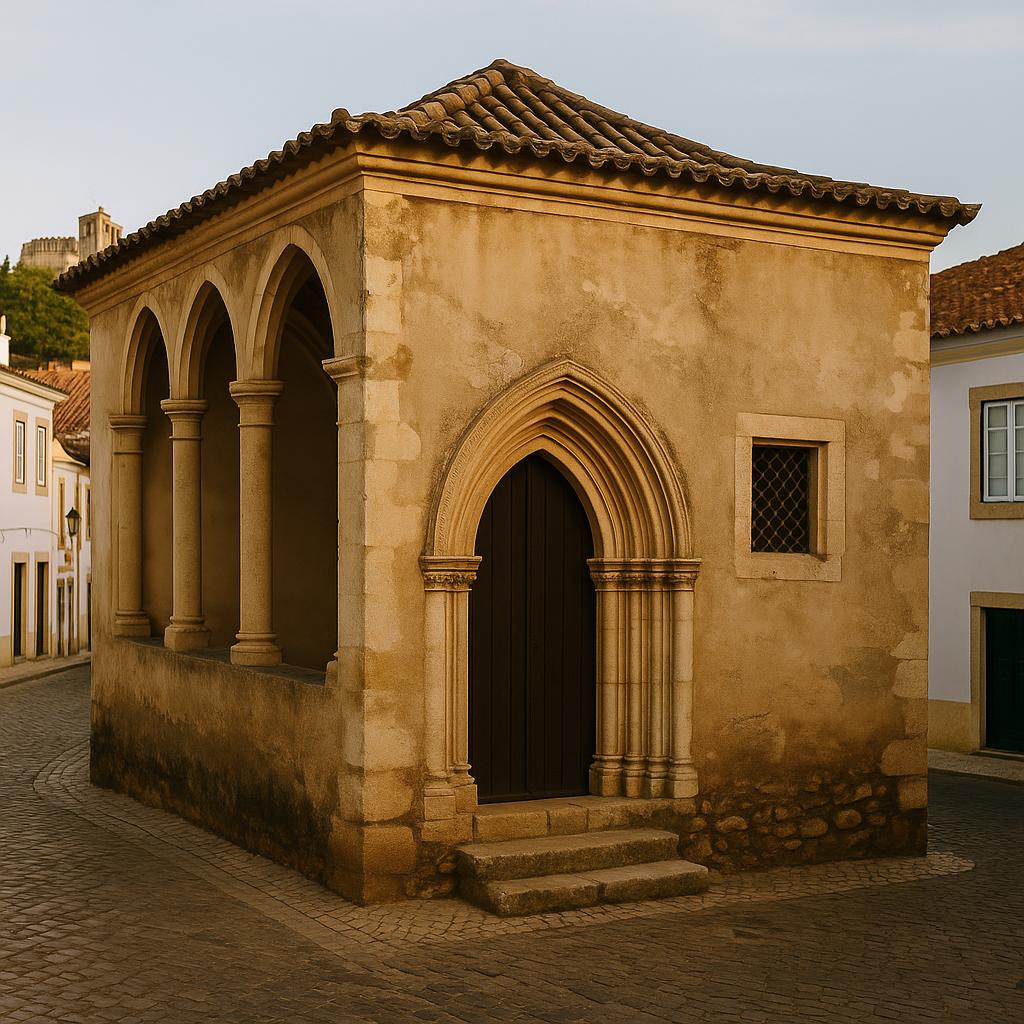
The Tomar Synagogue, constructed between 1430 and 1460, stands as one of the best-preserved medieval synagogues in the Iberian Peninsula. Its significance lies not only in its architectural preservation but also in its reflection of the complex history of Jews in Portugal.
Medieval Beginnings and Architectural Significance
The construction of the Tomar Synagogue during the mid-15th century coincided with a period of relative peace and stability for Jewish communities in Portugal. This timing allowed for the creation of a dedicated spiritual and communal space, embodying both architectural innovation and cultural expression typical of the time.
The synagogue’s Gothic-style architecture, seen in its ribbed vaults and pointed arches, not only highlights the Jewish community’s integration and adaptation within Portugal but also serves as a testament to their contributions to medieval Iberian culture.
Transitions Through Time
The Synagogue of Tomar’s historical trajectory mirrors the tumultuous period following the expulsion and forced conversion of Jews in 1496 under King Manuel I of Portugal. This edict led to its conversion into various secular roles such as a church, prison, warehouse, and hay store.
These transformations illustrate the shifts in societal structures and attitudes towards Jews during and after the Inquisition. Each change the building underwent reflects a different facet of Portuguese history, highlighting the resilience of cultural landmarks through changing times.
A National Monument and Cultural Restoration
In the 20th century, recognition of the synagogue’s historical importance led to its designation as a National Monument. This recognition initiated efforts to preserve and restore the synagogue, ensuring that it could serve as an educational and cultural resource for future generations.
Today, it houses the Luso-Hebraic Museum Abraham Zacuto, named after the famed Jewish astronomer instrumental to Vasco da Gama’s exploration efforts. The museum showcases artifacts and documents, offering insights into the history of the Jewish community in Portugal and their lasting impact on the country.
Modern Significance and Educational Role
The Tomar Synagogue’s transformation into a museum underscores its role in fostering understanding and dialogue regarding the Jewish heritage in Portugal. Visitors gain valuable insights into the historical context of Jewish life and contributions during both the prosperous and persecuted eras in Portuguese history.
This makes the synagogue not only a symbol of resilience but also a bridge to deeper cultural and historical awareness, enriching the cultural tapestry of Tomar.
Practical Information for Visitors
Travelers interested in exploring the synagogue can enjoy a journey through history while viewing exhibits that delve into the Jewish experience in medieval Portugal. The synagogue is conveniently located in Tomar, a city rich in history and culture.
If you have only a few hours in Tomar, the synagogue is a must-visit for its architectural beauty and historical depth. Pair your visit with a tour of the surrounding areas to immerse fully in the historical narrative of this fascinating region.
Exploring More on Foot
For those continuing their exploration, the surrounding neighborhood offers a glimpse into the broader cultural influences that have shaped Tomar. Walking tours can enhance your understanding of the Jewry’s integration into local society, as well as the social dynamics of medieval Portugal.
FAQs
- What makes the Tomar Synagogue unique? The synagogue’s historical continuity and architectural features make it a rare surviving example of medieval Jewish religious structures in Portugal.
- What can visitors expect at the museum? Expect a curated experience with artifacts, documents, and exhibits that tell the story of the Jewish impact on Portuguese history.
For more explorations in Tomar, visit the City Hub to discover additional attractions and experiences.
Explore further into Portuguese history by visiting nearby destinations such as Fátima, known for its religious significance.


Leave a Reply