GoToo · Portugal
Lisbon Airport to Sintra: Transport Options Compared | GoToo
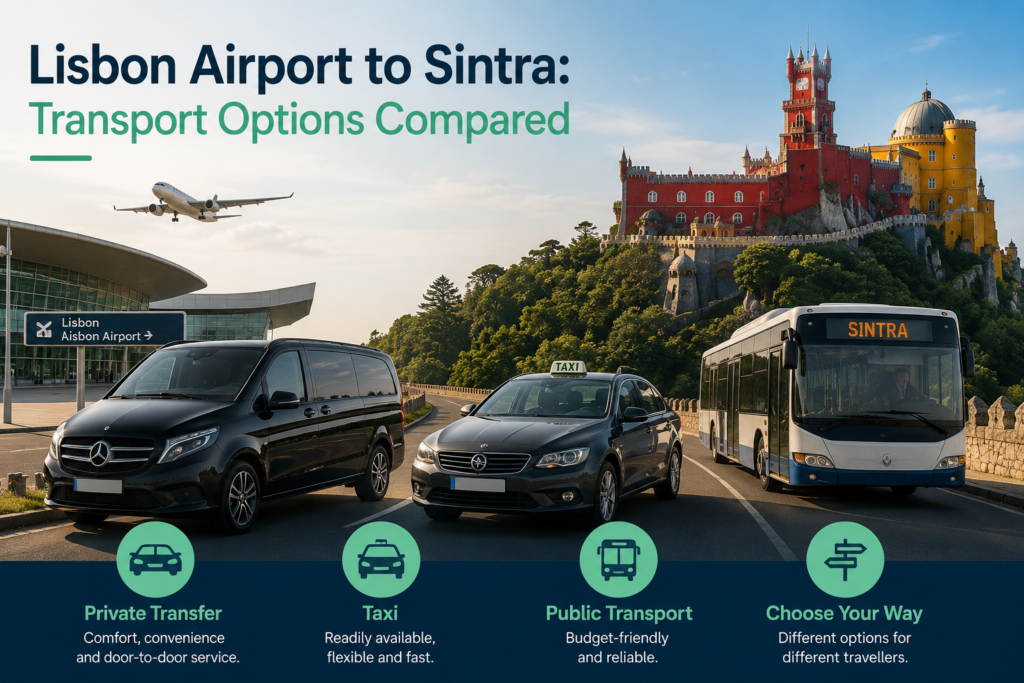
In short. The journey from Lisbon Airport to Sintra takes 40–50 minutes by car, depending on traffic and your destination in town. You can travel by train (changing at Rossio or Oriente), taxi, ride-hail app or private transfer. Each option offers different trade-offs in cost, convenience and comfort, and the best choice depends on your luggage, arrival time and where you're staying.
This guide compares every practical option, explains what happens step by step and helps you decide which suits your trip.
Why Sintra from the airport?
Many visitors arrive in Lisbon and head straight to Sintra rather than checking into a city hotel first. The town sits roughly 30 km northwest of the airport, making it an easy first or last stop if your itinerary prioritises Sintra's palaces, gardens and mountain air. Travelling direct saves the hassle of navigating central Lisbon with luggage, and you can start exploring as soon as you drop your bags.
On the other hand, Sintra has limited luggage storage, so if you're planning a day trip from Lisbon rather than an overnight stay, you're usually better off dropping luggage at your Lisbon hotel first.
Train: the budget option with two changes
Public transport from Lisbon Airport to Sintra always involves at least one change. There is no direct rail link. The most common route is to take the Metro red line from the airport to São Sebastião, switch to the blue line towards Santa Apolónia, then alight at Rossio or Oriente and board a commuter train to Sintra. Total journey time runs between 70 and 90 minutes, depending on connections.
Tickets are inexpensive. A single Metro journey costs a few euros, and the Sintra Line train is covered by the same zapping card or day pass. However, Metro stations have stairs and escalators but not always working lifts, so two suitcases and a backpack quickly become awkward. Trains to Sintra run frequently during the day but thin out in the evening, and the last service leaves Rossio well before midnight.
In practice, the train makes sense if you're travelling light, confident with public transport in a new city and have time to spare. For families or anyone arriving late at night, the savings rarely justify the effort.
Taxi and ride-hail apps
Taxis wait outside the arrivals hall at a dedicated rank. The fare to Sintra is metered, and you can expect to pay somewhere in the region of €40–€50, though prices rise at weekends, after 9 pm and if you have extra luggage in the boot. Not every driver speaks English, and receipts are sometimes vague. Traffic through the airport tunnel and along the motorway can add 15–20 minutes during rush hour.
Ride-hail apps such as Uber and Bolt operate at Lisbon Airport and typically cost slightly less than a metered taxi. You order from the app, see an estimate upfront and track your driver in real time. The catch is surge pricing: during busy periods, early mornings, Friday evenings or when several flights land at once, the fare can double. In addition, drivers occasionally cancel if the trip seems too long or unprofitable, leaving you waiting and re-requesting. For a full breakdown of how these services compare, read our taxi vs Uber vs private transfer guide.
Both taxis and app-based rides drop you at your hotel or address, which is more convenient than the train. Yet neither guarantees fixed pricing or English-speaking drivers, and availability can be unpredictable late at night or during peak tourist season.
Private transfer: door-to-door with a fixed price
A private transfer means a professional driver meets you in the arrivals hall, holding a name board, and takes you directly to your hotel or holiday rental in Sintra. The price is agreed when you book, so there are no surprises at the end of the ride. Journey time is the same as a taxi, around 40 minutes in light traffic, but the experience is more predictable and often more comfortable.
Because the service is pre-booked, the driver tracks your flight and waits if you land late or if passport control takes longer than expected. You walk out of customs, spot your name and leave. There's no queue, no meter ticking while you load luggage and no negotiating fare supplements for bags or tolls.
Private transfers suit families, groups and anyone who values simplicity after a long flight. The per-vehicle pricing often works out cheaper than multiple taxis, and you know exactly what you'll pay before you board the plane. For more on arrival logistics, see our Lisbon airport transfer hub.
Comparing the options: travel time, cost and convenience
| Method | Typical time | Approx. cost | Best for |
|---|---|---|---|
| Train (via Rossio) | 70–90 min | Low | Solo travellers with light luggage and time to spare |
| Taxi (metered) | 40–50 min | €40–€50+ | Immediate departure without pre-booking, single passengers |
| Uber / Bolt | 40–50 min | Variable | Tech-savvy travellers willing to risk surge pricing |
| Private transfer | 40–50 min | Fixed upfront | Families, groups, anyone seeking reliability and comfort |
Travel time is similar for all road options, though trains add at least 20 extra minutes plus waiting. Cost depends on your group size: a private transfer for four often costs the same as two metered taxis, while the train remains cheapest for solo travellers. Convenience tips firmly in favour of pre-booked door-to-door transport, especially if you arrive tired or after dark.
Practical tips for the journey
Whichever option you choose, it helps to know a few practical details. Lisbon Airport sits close to the city, so the drive to Sintra follows the A37 and A16 motorways before joining the IC19 north. Traffic is usually light early in the morning and late at evening, but the evening rush between 5 pm and 7 pm can slow things down, particularly around the Amadora junction.
Most Sintra hotels sit in the historic centre near the National Palace or scattered across the surrounding hills. Narrow streets mean some properties have drop-off points a short walk from the entrance. If you book a private transfer, let the driver know your exact address so they can plan the best route. For context on navigating Lisbon's transport choices more broadly, our guide to getting from the airport to your hotel covers similar principles.
Mobile data is useful if you're relying on an app or need to contact your driver, though most airports and hotel lobbies offer free Wi-Fi. Keep your booking confirmation handy, either printed or on your phone, so you can show details if asked.
What to do once you arrive in Sintra
Once you've dropped your bags, Sintra unfolds quickly. The town is compact, and many of the main sights sit within walking distance or a short bus ride. Pena Palace crowns the hilltop and draws the biggest crowds, while Quinta da Regaleira offers quieter gardens and the famous Initiation Well. The Moorish Castle, Monserrate Palace and the National Palace all deserve time, and you can easily fill two or three days without repeating yourself.
If you're based in Lisbon instead and visiting Sintra as a day trip, consider reading our detailed guide on how to get from Lisbon to Sintra, which covers train schedules, bus connections and touring strategies.
Why book with GoToo
GoToo is a licensed Portuguese travel agency (RNAVT 10586) offering private transfers and day trips across Portugal. Every booking comes with a fixed price per vehicle, confirmed upfront, so you know what you'll pay before you leave home. There are no surge fees and no hidden extras.
All drivers are professional, English-speaking and insured. They track your flight in real time and wait in the arrivals hall with a name board, even if your plane lands late. Meet-and-greet service is standard, and you're taken door-to-door, straight from the terminal to your hotel entrance.
Because GoToo operates as a registered tourism service rather than a ride-hail platform, vehicles meet higher standards of comfort and cleanliness, and drivers are trained to provide local advice, suggest routes and adjust pick-up times if your plans change. For groups and families, per-vehicle pricing often beats the cost of two taxis or rideshares, and the reliability removes the guesswork from your arrival.
Frequently asked questions
How long does it take to get from Lisbon Airport to Sintra?
By car, the journey takes 40–50 minutes in normal traffic. By train via Rossio, you should allow 70–90 minutes including connections and walking time.
Is there a direct train from Lisbon Airport to Sintra?
No. You must take the Metro to a main station, usually Rossio or Oriente, then board a commuter train on the Sintra Line. The route involves at least one change.
Can I take Uber from Lisbon Airport to Sintra?
Yes. Uber and Bolt both operate at the airport and will take you to Sintra. Fares vary with demand, and surge pricing during busy periods can double the cost. Drivers occasionally cancel longer trips.
What does a taxi from Lisbon Airport to Sintra cost?
Metered taxis typically charge in the range of €40–€50, though the final fare depends on traffic, time of day and luggage supplements. Evening and weekend rates are higher.
Should I book a private transfer in advance?
If you want a fixed price, guaranteed English-speaking driver and no waiting at the taxi rank, booking ahead makes sense. Pre-booked transfers also include flight tracking, so your driver adjusts for delays automatically.
Where do private transfer drivers meet passengers?
Drivers wait inside the arrivals hall, just beyond customs, holding a name board. You collect your luggage, pass through the doors and meet your driver without leaving the terminal.
Is Sintra a good first stop after landing in Lisbon?
If you're staying in Sintra overnight, heading there directly saves time and avoids dragging luggage through Lisbon. However, if you're only visiting for the day, it's easier to drop bags at your Lisbon hotel first.
Plan your journey
Explore this city with GoToo


Ready to plan without stress?
Use the tags above to open the right city page, or request a quote and we’ll help you plan.