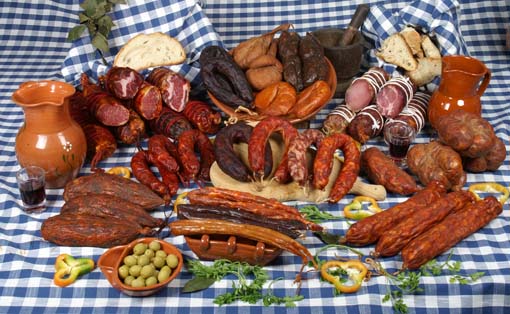
Enchidos alentejanos — the cured pork sausages of the Alentejo — are among the region's most characteristic products, and a regular presence on the table in Estremoz.
They owe their quality to the porco preto, the black Iberian pig that roams the oak woodlands of the Alentejo, feeding on acorns. The meat is turned into a wide range of cured sausages and products: among them paio, chouriço, the cumin-scented painho, farinheira and morcela, each with its own character, seasoned and cured in the traditional way.
The enchidos are eaten as a petisco — sliced as a starter — grilled, or added to stews and bread dishes, where they lend their smoky, savoury depth. Linked to the rituals of the matança, the traditional pig slaughter, they are a strong expression of Alentejo country tradition, and an easy and characteristic taste for visitors to Estremoz.
Highlights
- The characteristic cured pork sausages of the Alentejo
- Made from the acorn-fed black Iberian pig, porco preto
- A range including paio, chouriço, painho and morcela
- Eaten sliced as a petisco, grilled, or added to stews
- Linked to the tradition of the matança, the pig slaughter
Frequently asked questions
What are enchidos alentejanos?
They are the cured pork sausages of the Alentejo, made from the acorn-fed black Iberian pig, in a range of varieties.
What kinds of enchidos are there?
Among them paio, chouriço, the cumin-scented painho, farinheira and morcela, each with its own character.
How are enchidos eaten?
Sliced as a petisco or starter, grilled, or added to stews and bread dishes for their smoky, savoury depth.