
GoToo · Portugal
Boca do Inferno Cascais: How to Visit, What to See & Practical Info
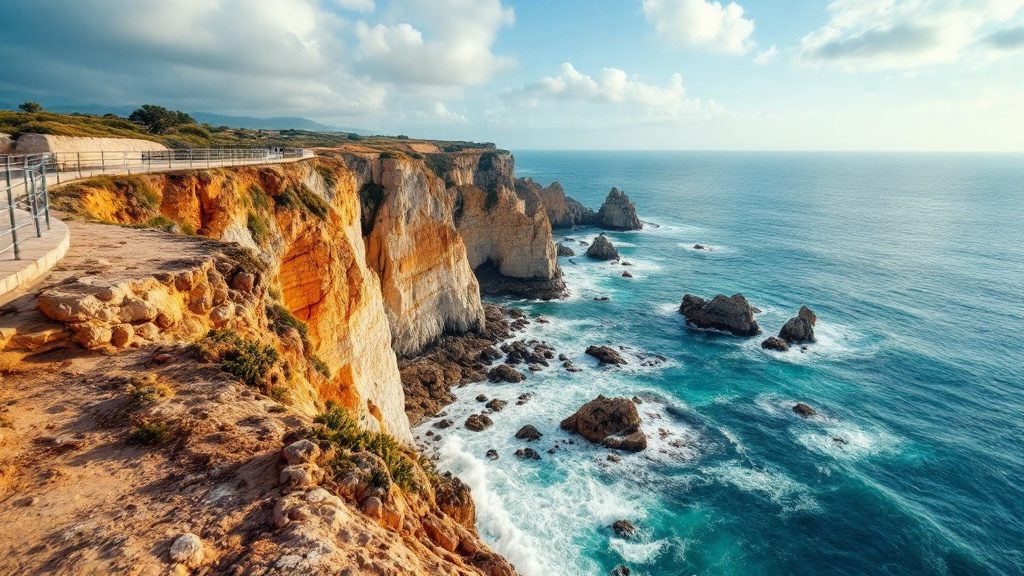
Boca do Inferno, literally 'Hell's Mouth', is a dramatic sea cliff and blowhole carved into the rocky coastline just west of Cascais. The Atlantic has hollowed out a natural arch and cave here, and when the waves are high, water crashes through the opening with enough force to send spray high into the air. It's a short, free visit that takes about twenty to thirty minutes, and it's one of the most popular natural sights near Lisbon.
The site is open all day, every day, and there is no entrance fee. You can walk right up to the edge of the cliff where metal railings mark the viewpoints. There are a few souvenir stalls and a small café nearby, but the main draw is the coast itself.
How to Get to Boca do Inferno from Cascais and Lisbon
Boca do Inferno sits about two kilometres west of central Cascais, along the coast road towards Guincho beach. The easiest way to reach it depends on where you're starting from.
If you're already in Cascais, you can walk along the seafront promenade. The route is flat and scenic, following the coast past the marina and continuing west. It takes around twenty-five to thirty minutes on foot. You can also take a local taxi or ride-share for a few euros.
Coming directly from Lisbon, you have a few options. The suburban train from Cais do Sodré station runs regularly to Cascais and takes about forty minutes. Once you arrive in Cascais, you can walk or take a short taxi ride to Boca do Inferno. If you're travelling from Lisbon Airport, a direct transfer to Cascais is the most straightforward choice, especially if you have luggage or limited time.
For an instant fixed price and booking, check the GoToo booking page.
What to See and Expect at Boca do Inferno
The site itself is compact. A paved path leads from the small car park to the main viewpoint, which overlooks the collapsed sea cave and the arch through which the ocean surges. On calm days, the water is relatively quiet, but when the Atlantic is rough, especially in autumn and winter, the waves explode through the opening and send plumes of white foam into the air.
There are railings along the clifftop, and the ground is uneven in places, so wear comfortable shoes. The rock formations are jagged and weathered, and you can see layers of limestone shaped by thousands of years of erosion. Seabirds often nest on the cliffs, and the sound of the waves is constant.
Most visitors spend fifteen to thirty minutes here. There are a handful of souvenir kiosks selling postcards, shells and local crafts, and a small café where you can get a drink or a snack. The view is best in the late afternoon when the light is softer, but the site is worth visiting at any time of day.
The History and Legend Behind the Name
The name Boca do Inferno has been used for centuries, likely because of the violent way the sea crashes into the rocks and the echoing roar that comes from deep inside the cave. Local legend tells of a sorcerer or magician who once lived in the caves and practiced dark arts, though there is no historical evidence for this story.
In more recent history, the site became famous in 1930 when the occultist Aleister Crowley staged his own disappearance here, leaving behind a suicide note. He reappeared weeks later in Berlin, claiming the whole affair was a hoax to escape creditors and generate publicity. The incident added to the mystique of the place, though today most visitors come simply to see the geology and the ocean.
For more on the history and folklore, see this detailed guide to Boca do Inferno's history and legend.
Combining Boca do Inferno with Cascais and Sintra
Because Boca do Inferno is so close to Cascais, it fits easily into a half-day or full-day itinerary. Cascais itself has a pleasant old town, a fishing harbour, sandy beaches and several small museums. You can have lunch by the waterfront, explore the Cidadela fortress, or simply walk the promenade.
Many visitors also combine Cascais with Sintra, which is about half an hour inland by car or bus. Sintra is known for its palaces, gardens and mountain scenery, and it's one of the most popular day trips from Lisbon. A guided tour that includes both Sintra and Cascais often stops at Boca do Inferno along the way. You can find options for guided tours near Lisbon that cover Sintra, Cascais and Boca do Inferno.
If you prefer to travel independently, a private transfer gives you the flexibility to set your own schedule and stop wherever you like. This works well if you're visiting with family or want to avoid the fixed timetables of group tours.
Practical Tips for Your Visit
- Boca do Inferno is outdoors and exposed to the wind. Bring a jacket, especially in winter or on windy days.
- There are no toilets at the site itself, but you'll find facilities in central Cascais, a short walk away.
- The best conditions for dramatic waves are during Atlantic storms, but the spray can make the railings slippery. Take care near the edge.
- Parking is limited and can fill up quickly in summer and on weekends. Arriving early or walking from Cascais avoids this issue.
- The site is wheelchair-accessible up to the main viewpoint, though the path is slightly uneven in places.
- If you're planning to visit Guincho beach or Cabo da Roca (the westernmost point of mainland Europe), both are a short drive further west along the same coast road.
For more context on getting to Cascais from Lisbon, this guide on Lisbon to Cascais covers all the main transport options.
Frequently Asked Questions
Do you need tickets to visit Boca do Inferno?
No. Boca do Inferno is a natural site with no entrance fee and no tickets required. It is open all day, every day of the year.
How far is Boca do Inferno from Lisbon?
Boca do Inferno is about thirty kilometres west of central Lisbon, just outside Cascais. The drive takes around thirty-five to forty-five minutes depending on traffic, and the train to Cascais takes about forty minutes from Cais do Sodré.
Can you see Boca do Inferno on a day trip from Lisbon?
Yes. Boca do Inferno works well as part of a day trip that includes Cascais, and often Sintra as well. The visit itself is short, so it's easy to combine with other stops along the coast.
What does Boca do Inferno mean?
Boca do Inferno translates to 'Hell's Mouth' in English. The name refers to the violent way the sea rushes into the collapsed cave and the loud echoing sound it makes, especially during storms.
Is Boca do Inferno the same as Boca de Inferno?
Yes. Both spellings refer to the same place. 'Boca do Inferno' is the standard Portuguese form, but you may see 'Boca de Inferno' used informally or in older texts.
Plan your journey
Explore this city with GoToo


Ready to plan without stress?
Use the tags above to open the right city page, or request a quote and we’ll help you plan.