
GoToo · Portugal
Xarém com Conquilhas de Olhão: Traditional Algarve Dish
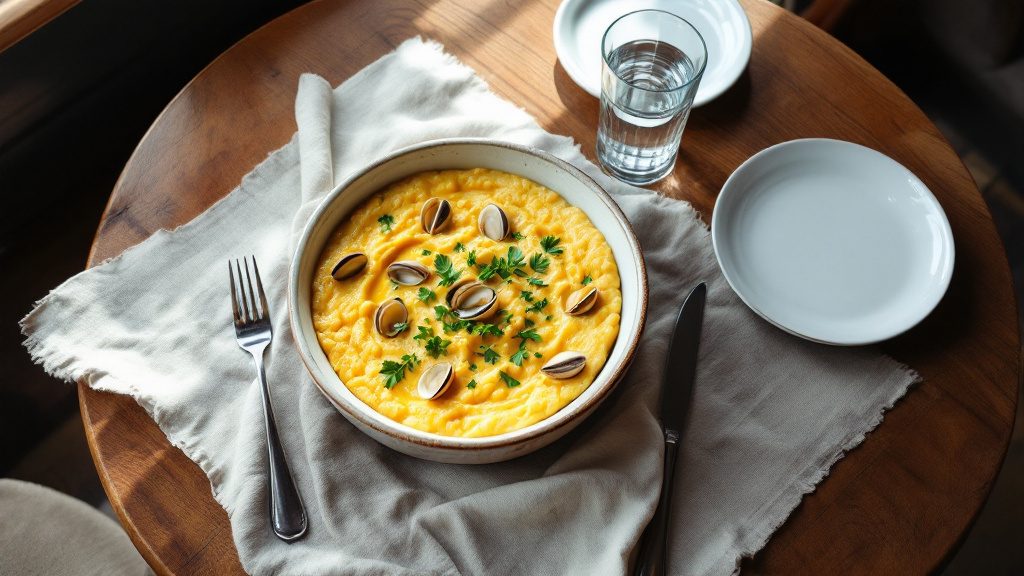
Xarém com conquilhas is a traditional Algarve dish that originated in Olhão, a working fishing town east of Faro. The dish combines xarém, a thick porridge made from cornmeal, with conquilhas (wedge clams or cockles), creating a simple, filling meal that reflects the region's coastal roots and peasant cooking traditions. It tastes earthy, slightly briny, and comforting, with a texture somewhere between polenta and risotto.
What Is Xarém
Xarém is a cornmeal-based dish that has been a staple in the Algarve for centuries, particularly among fishing and farming families. The base is made by slowly cooking coarse cornmeal in water or stock until it thickens into a porridge. Historically, xarém was a humble, inexpensive food that could be stretched to feed many people.
The dish has roots that likely go back to when corn arrived in Portugal from the Americas in the sixteenth century. In poorer households, xarém was eaten plain or with whatever was available, greens, beans, or small fish. Over time, richer versions appeared, combining the cornmeal with shellfish, pork, or chorizo.
Xarém com conquilhas is the most traditional version from Olhão, where fresh clams were plentiful and cheap. The clams release their salty juice into the cornmeal as it cooks, flavouring the entire dish naturally without needing much else.
How Xarém com Conquilhas Is Made
The preparation is straightforward but requires patience and stirring. Conquilhas are opened by steaming them with garlic, olive oil, and sometimes white wine or a splash of water. The clam meat is set aside, and the cooking liquid, full of flavour, is strained and combined with water or fish stock.
Coarse cornmeal is then gradually added to the hot liquid while stirring constantly to avoid lumps. The mixture cooks slowly, thickening as the cornmeal absorbs the liquid. More liquid is added as needed until the xarém reaches a creamy, spoonable consistency.
Once cooked, the clams are folded back in, along with chopped coriander or parsley. Some cooks add a little more olive oil at the end. The result is warm, hearty, and deeply savoury, with the sweetness of the clams balancing the neutral corn base.
Where to Try Xarém com Conquilhas
Olhão remains the best place to eat xarém com conquilhas. The town's markets and traditional tascas (small family-run taverns) often serve it, especially during cooler months. It is not always on the menu daily, so it is worth asking or checking ahead.
In nearby Faro, some restaurants also prepare the dish, particularly those focusing on regional Algarve cuisine. Look for places that list traditional or Olhanense specialities rather than tourist-oriented menus.
Because xarém is time-consuming to make, it is less common in quick-service restaurants. Smaller, slower-paced spots with a local clientele are your best option. Expect portions to be generous and prices modest, usually between eight and fifteen euros, though this can vary.
Visiting Olhão from Faro
Olhão is about eight kilometres east of Faro and easy to reach. Regional trains run regularly between Faro and Olhão, taking around ten minutes. Buses also connect the two towns frequently throughout the day.
If you are travelling with luggage or in a group, a private transfer can be more comfortable and direct. GoToo offers fixed-price transfers across the Algarve, making it simple to move between towns without waiting for public transport.
Olhão itself is worth exploring beyond the food. The town has two lively markets, one for fish, one for fruit and vegetables, and a waterfront lined with cube-shaped houses that reflect North African influence. Ferries leave from the harbour to the nearby barrier islands, Armona and Culatra, if you want to combine a meal with a short trip to the beach.
Other Variations of Xarém
While xarém com conquilhas is the most iconic version, the dish appears in other forms across the Algarve. Xarém com amêijoas uses different clams, often the smoother-shelled variety found in the Ria Formosa. The taste and technique are very similar.
Some restaurants prepare xarém de marisco, which includes a mix of seafood, prawns, mussels, clams, and sometimes pieces of fish. This version is richer and more complex but further from the original peasant dish.
Xarém de carne de porco adds pork belly, chorizo, or ribs instead of shellfish, reflecting inland traditions where seafood was less accessible. This version is heavier and often cooked with paprika and bay leaves.
Each variation keeps the same cornmeal base and slow-cooked method, but the flavour changes with what is stirred in at the end.
Frequently Asked Questions
What is the difference between xarém com conquilhas and xarém com amêijoas?
Both dishes use clams and cornmeal, but conquilhas are wedge clams or cockles, slightly smaller and more textured. Amêijoas are rounder, smoother clams. The preparation and flavour are nearly identical, and many restaurants use the terms interchangeably or based on what is freshest that day.
Where can I find xarém com conquilhas in Faro?
Some traditional Portuguese restaurants in Faro serve xarém com conquilhas, especially those near the old town or marina that focus on regional Algarve cuisine. It is not as common as in Olhão, so it is worth calling ahead or asking when you arrive. Menus may list it under regional or daily specials rather than as a permanent option.
Is xarém gluten-free?
Xarém is naturally gluten-free, as it is made from cornmeal, clams, water or stock, olive oil, and herbs. However, some restaurants may add ingredients during preparation or cook it in shared pots, so if you have coeliac disease or strict dietary needs, confirm with the kitchen before ordering.
Plan your journey
Explore this city with GoToo


Ready to plan without stress?
Use the tags above to open the right city page, or request a quote and we’ll help you plan.